
Night walks are part of the job for a lot of dog owners—and for pet shops, groomers, trainers, and rescue groups, they’re part of the conversation every single day. Customers don’t want a “cute” accessory. They want something that keeps a dog visible, keeps the handler in control, and holds up when the weather turns. That’s exactly why the light up harness for dogs category keeps growing, both in retail and wholesale.
In this guide, we’ll break down what actually matters when you’re buying or selling a light up harness for dogs: LED placement, waterproofing, battery design, materials, sizing, and the details that reduce returns. We’ll also cover how to explain those specs to customers in plain language, because good specs only help if people understand them.
What to Look for in a Light Up Harness for Dogs (Specs That Matter)
There are a lot of LED harnesses on the market. Some are solid. Some are basically a costume with a battery. If you’re stocking inventory or recommending products professionally, focus on the points below.
1) LED visibility: brightness, placement, and viewing angle
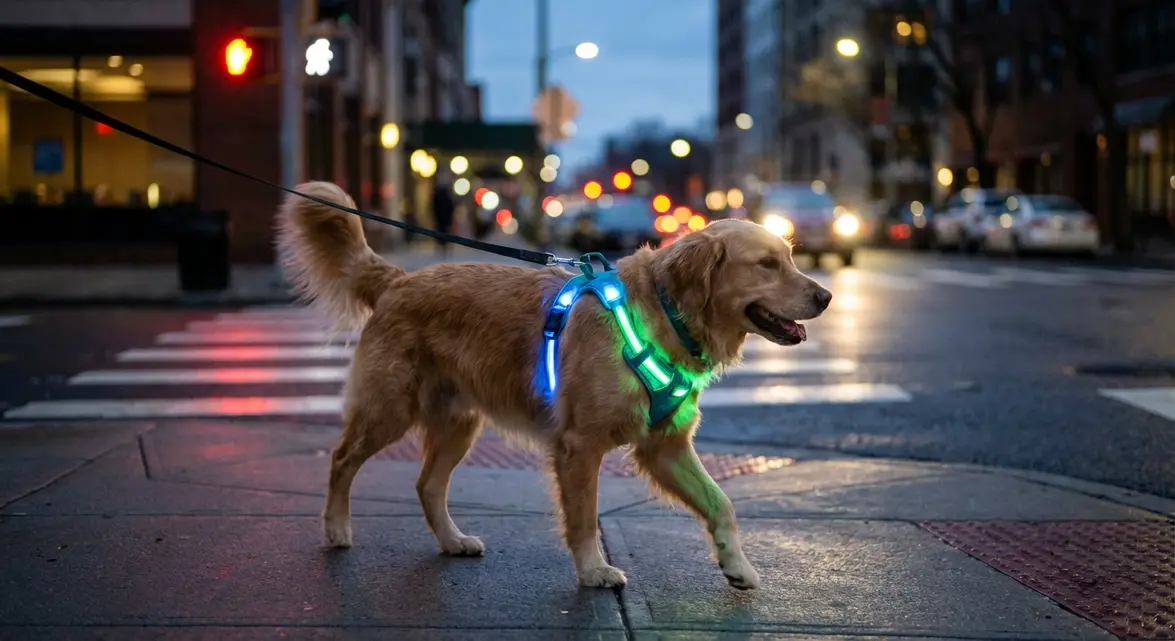
The whole point of a light up harness for dogs is to make the dog easy to see from a distance—especially for drivers coming from behind or from the side at intersections.
- Placement: Look for LED strips that wrap across the chest/shoulders and along the back. Back-only lighting can disappear when the dog lowers its body to sniff.
- Even glow: A consistent light bar reads better at night than a few tiny points of light.
- Modes: Steady + flash modes are ideal. Steady works well for neighborhoods; flashing can stand out near traffic. The best units keep the mode button simple—one button, clear changes.
2) USB rechargeable battery: what buyers should expect
Most customers now expect rechargeable over disposable batteries. A USB rechargeable light up harness for dogs also simplifies store messaging: “Charge it like your phone.”
- Battery runtime: Aim for a harness that can cover a week of normal evening walks without daily charging. Realistically, 2–6 hours of steady use (more on flash mode) is a common, workable range depending on LED intensity.
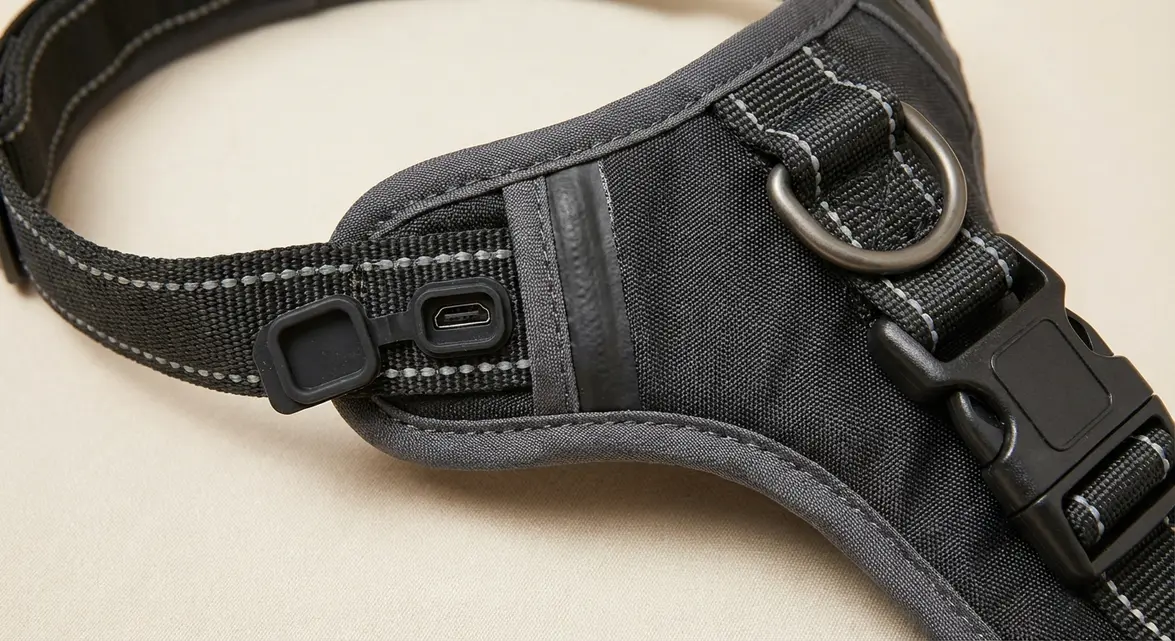
- Charging access: The charging port should be easy to reach but protected. A silicone plug or sealed cover is not a luxury—it’s what keeps moisture out when a customer forgets to close it after charging.
- Indicator lights: A simple red/green indicator reduces confusion and returns.
3) Waterproofing: what “waterproof” should mean
Here’s where a lot of listings get sloppy. For a light up harness for dogs, “water-resistant” might handle drizzle, but customers often buy these because they walk in real weather.
- Sealed electronics: The LED strip and control module should be protected against splashes and wet fur.
- Port protection: The USB port needs a snug cover. If water can pool in the port, the harness will fail—usually after the return window.
- Cleaning reality: Most LED harnesses are “wipe clean,” not machine washable. Set that expectation clearly on product pages and shelf tags.
If you’re sourcing for resale, ask the supplier how waterproofing is validated. Even if they don’t cite a formal IP rating, you want a clear statement like “protected from rain and splashes” with a defined test method.
4) Webbing, stitching, and hardware: the “lunge test”
A harness can light up beautifully and still be a failure if the dog can pull out of it or the buckles snap. For shops, that means unhappy customers and safety complaints. For commercial buyers, it can mean liability headaches.
- Nylon or polyester webbing: Quality webbing matters because it distributes force. When a 70 lb Lab lunges, thin webbing can roll, chafe, or tear at stress points.
- Reinforced stitching: Bar-tack stitching at the D-ring and strap joins helps prevent blowouts under sudden load.
- Buckles and adjusters: You want sturdy hardware that doesn’t creep (loosen) over time. If a strap slips, the harness fit changes and the LEDs can rotate under the belly where no one sees them.
- D-ring placement: A back D-ring is standard for walking. Some designs also include a front clip to reduce pulling. If you stock both, label them clearly so staff can explain the difference quickly.
5) Fit and sizing: how to reduce returns
Returns on harnesses usually come down to sizing confusion, not product defects. A light up harness for dogs adds another layer: if it’s too loose, the light rotates; too tight, it rubs and customers quit using it.
- Neck and chest adjustment: Two adjustment points are better than one.
- Clear size chart: Chest girth is the key measurement. Train staff (and your product copy) to lead with that.
- Padding placement: Padding should sit on the sternum and under the straps that contact the dog most. Too much bulk can trap heat; too little can cause friction.
Why a Light Up Harness for Dogs Sells (and Keeps Customers Safer)
People buy visibility products for two reasons: fear and convenience. Fear of a close call with a car, a bike, or another dog they didn’t see. Convenience because they’re tired of juggling flashlights, clip-on lights, and reflective vests that slide around.
1) Better visibility than collars alone
Collars sit high on the neck and often get hidden by fur, jackets, or the dog’s head position. A light up harness for dogs creates a larger lighted “shape” on the body. That shape is what drivers and cyclists pick up faster—especially from a side angle.
2) More control for the handler
The harness isn’t just about light. It’s about leverage and comfort. When the dog pulls, a harness distributes pressure across the chest and shoulders instead of the throat. That’s important for brachycephalic breeds, seniors, and dogs that cough on collars.
For trainers and rescues, recommending a light up harness for dogs can reduce slip-outs during night potty breaks and foster transitions. Less scrambling. Less stress.
3) Fewer “I didn’t see you” moments near roads and driveways
Most incidents don’t happen in the middle of nowhere. They happen in driveways, parking lots, and quiet streets where people assume it’s safe. A light up harness for dogs makes a dark dog visible when it steps off a curb or moves behind a parked car.
4) Helps multi-dog households and group walks
If someone walks two dogs—or runs a pack walk business—keeping track of bodies in the dark is not trivial. Different colors or clearly visible LED strips make it easier to identify which dog is where. That’s a practical selling point for pros.
5) Strong add-on sales and seasonal demand
From a B2B standpoint, visibility gear tends to spike in fall and winter, then stays steady for early-morning summer walkers. A light up harness for dogs pairs well with:
- Reflective leashes and couplers
- Poop bag dispensers and night-walk kits
- Raincoats and booties
- Safety lights for humans (clip lights, reflective bands)
Buying for Wholesale: Practical Questions to Ask Before You Stock a Light Up Harness for Dogs
If you’re ordering in bulk, you’re not just buying a product—you’re buying the return rate, the customer reviews, and the amount of staff time needed to explain it. Use these questions to qualify a supplier or SKU.
1) What’s the failure rate on charging ports and switches?
Electronics failures are the fastest way to tank reviews. Ask how the control module is sealed, how the button is protected, and whether the charging port cover is tethered so it doesn’t get lost.
2) Is the LED module replaceable?
Some designs allow replacing a light strip or module without throwing away the harness. That’s a strong value story for customers and can reduce warranty costs for commercial accounts. If the module isn’t replaceable, the harness should be priced accordingly and backed by a clear warranty.
3) What materials and hardware grades are used?
“Nylon” can mean a lot of things. Ask about webbing thickness, stitching reinforcements, and buckle strength. A bargain light up harness for dogs that breaks under load is not a bargain after you process returns.
4) Do you have consistent sizing across runs?
Nothing frustrates repeat customers like buying the same “Medium” and getting a different fit. For B2B buyers, consistency is inventory sanity. Ask if the factory follows a fixed spec sheet and whether they track measurement tolerances.
5) Packaging and instructions: are they retail-ready?
Good packaging reduces staff time. Look for:
- Clear size chart on the card or box
- Charging instructions with approximate charge time
- Care instructions (wipe clean, don’t submerge unless rated)
- Mode instructions (steady/flash) in simple language
How to Merchandize a Light Up Harness for Dogs (So It Doesn’t Sit on the Shelf)
Visibility gear sells best when customers can imagine the scenario. Make it easy.
- Demo unit: Keep one charged and lit near the aisle endcap. People buy with their eyes.
- Bundle signage: “Night Walk Kit” (harness + leash + human clip light) increases basket size.
- Fit reminder: Put “Measure chest girth” on the shelf tag. It cuts down wrong-size purchases.
- Seasonal placement: Move the light up harness for dogs display closer to jackets, booties, and rain gear in fall/winter.
Care, Maintenance, and Real-World Use Tips
A little education protects the product and your reputation. Here are the tips we recommend including on product pages or handouts with each light up harness for dogs purchase:
- Charge before first use: Helps condition the battery and ensures full brightness on night one.
- Close the port cover fully: Most “waterproof complaints” come from an open cover after charging.
- Wipe down after wet walks: Don’t store it soaked in a bag. Moisture trapped near the module is trouble.
- Check fit monthly: Dogs gain/lose coat and weight. A loose harness spins; a tight one rubs.
- Use reflective too: LEDs are great, but reflective trim still works if the battery dies. The best light up harness for dogs uses both.
Frequently Asked Questions
How long does a light up harness for dogs stay charged?
It depends on brightness and mode, but many rechargeable models run several hours per charge. Flash mode usually lasts longer than steady. For retail, it helps to list a realistic range rather than a best-case number.
Is a light up harness for dogs safe in the rain?
Most are built for rain and splashes if the electronics are sealed and the USB port cover is closed. If a product isn’t designed for heavy water exposure, say “rain-proof” instead of “fully waterproof” to set the right expectation.
Can I leave the light on all the time?
You can, but it will drain the battery and shorten runtime. We recommend turning the harness off between walks and charging it as needed, just like any rechargeable device.
What size light up harness for dogs should customers buy?
Chest girth is the most important measurement. If a dog is between sizes, go with the size that fits the chest and use the adjusters to dial in the neck and body straps.
Bottom line: A good light up harness for dogs is equal parts visibility tool and working harness—bright LEDs, solid webbing, reliable charging, and a fit that stays put. If you stock the right models and teach customers how to size and care for them, you’ll see fewer returns, better reviews, and safer walks. And that’s the whole point of a light up harness for dogs.
🚀 Ready to Upgrade Your Pet Safety Gear?
Thank you for reading our guide.
- 🔹 Looking for bulk pricing? Contact our Wholesale Team
- 🔹 Want to see more? Return to Homepage