
Dog Harness Light Up Guide: What to Stock for Night Safety
When customers ask for “something safer for night walks,” they’re usually not shopping for a gadget—they’re trying to avoid a close call. A dog harness light up setup is one of the simplest upgrades you can put on a shelf because it solves a real problem fast: drivers and cyclists see the dog sooner, and owners feel in control. If you’re buying for a retail store, grooming shop, training facility, or online catalog, this guide breaks down the specs that matter, what you should verify with suppliers, and how to choose a dog harness light up option that won’t come back as a return.
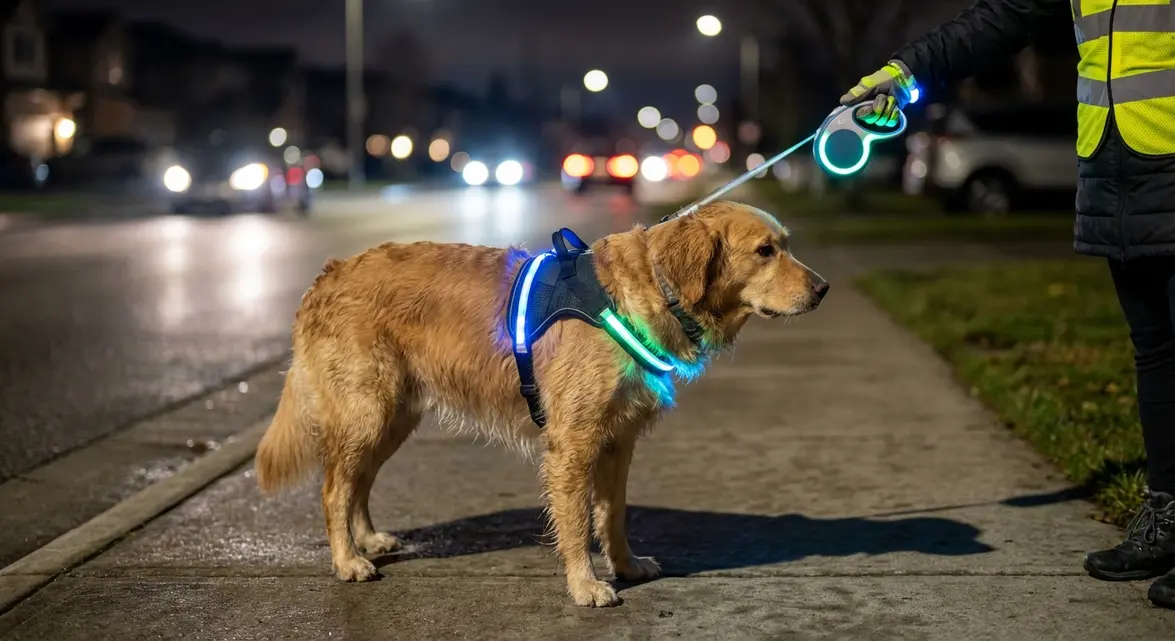
We’ve built and sourced safety gear long enough to know the difference between “looks bright in a studio photo” and “still visible when it’s drizzling, the leash is taut, and the dog is doing zoomies.” Let’s get practical.
Dog Harness Light Up Specs You Should Verify (Before You Order)
Not all dog harness light up products are built the same. The spec sheet can look impressive, but a few small details determine whether it performs on real sidewalks and real trails.
1) Lighting coverage: strips vs. edge piping
A dog harness light up design works best when light is visible from multiple angles—front, side, and rear. Thin “edge glow” can be okay, but wider LED strips or panels typically read brighter to cars at distance. Ask suppliers for night photos taken outdoors (not a dark room) and confirm which parts actually emit light.
2) Light modes that customers actually use
Most buyers want three modes: steady on, slow flash, and fast flash. Steady on is popular for city sidewalks; flashing can help in high-traffic areas where you want motion to catch attention. A good dog harness light up unit should switch modes with a single, easy button—no tiny recessed toggles that get jammed with dirt.
3) Battery type and run time (realistic numbers)
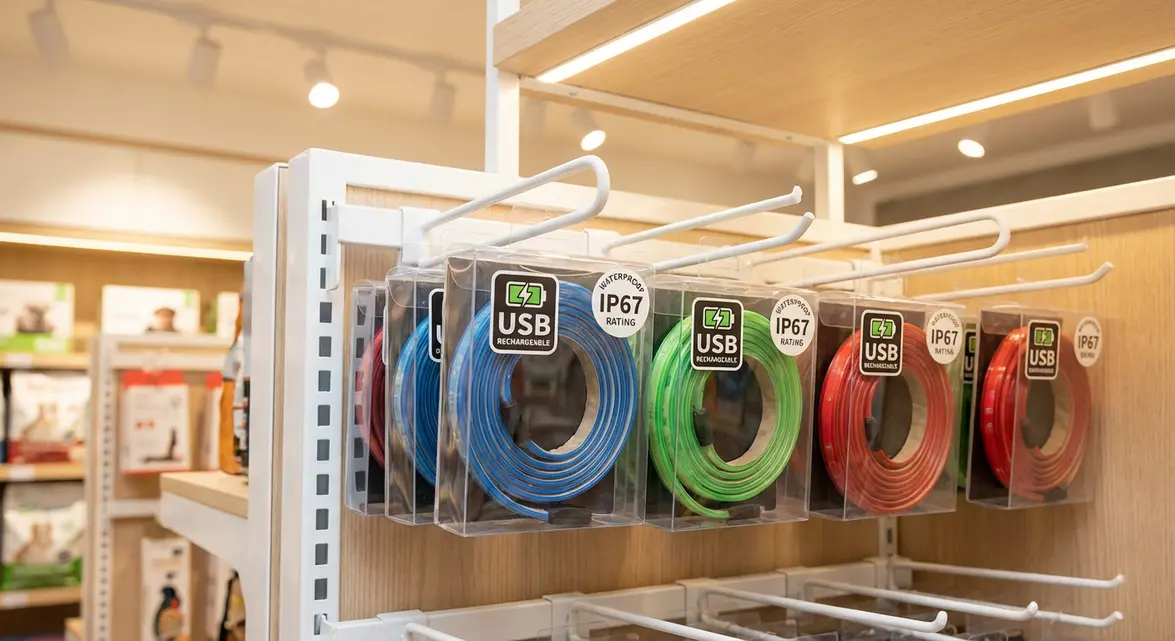
USB-rechargeable is the baseline now. Still, run time claims are all over the place. Verify run time per mode (steady often drains faster). For a dependable dog harness light up product, look for 4–8 hours on steady, longer on flash. Also check battery replacement policy—some low-cost units are sealed in a way that turns the whole harness into landfill once the battery fades.
4) Charging port protection
This is where returns happen. A dog harness light up harness may be “water resistant,” but the charging port is usually the weak point. Ask: does it have a snug silicone cover? Does the cover stay closed when a dog rolls in wet grass? If the answer is vague, expect complaints.
5) Waterproofing: what “waterproof” really means
Suppliers love the word waterproof. You want specifics. If the electronics are rated IP67, that means it can handle dust and temporary water immersion—useful for sudden downpours or a dog stepping into a puddle. If it’s closer to “splash proof,” position it honestly. A dog harness light up product that fails after a rainy week will crush your reviews.
6) Strap material, stitching, and hardware strength
Lighting is only half the story. The harness still has to behave like a harness. Nylon webbing is common, but thickness and stitching quality vary. You want reinforced stitch points where the D-ring and chest straps take load, so it won’t pop when a 70 lb Lab lunges toward a squirrel. A dog harness light up harness should have solid buckles (POM/Delrin-style plastics are common) and a D-ring that won’t bend.
7) Fit range and adjustability (the silent profit killer)
Fit issues drive returns. Look for multiple adjustment points and clear sizing. A good dog harness light up listing includes chest girth range, neck range, and guidance for dogs between sizes. If packaging only says S/M/L without measurements, you’ll pay for it later.
Why Dog Harness Light Up Products Sell (and How to Position Them)
A dog harness light up item is easy to explain at the counter, but the value goes beyond “it’s bright.” Here’s what customers are really buying, and how you can speak to it.
Night visibility from a driver’s point of view
Reflective trim helps—but only when a headlight hits it. A dog harness light up harness produces its own light, so it’s visible even before a car turns onto the street. That “early notice” is the safety win. If you’re merchandising, show a simple sign: “Visible before headlights.” That line lands.
Better control than a collar light
Many shoppers start with clip-on lights. Then they lose them, forget to charge them, or the dog shakes them off. A dog harness light up option keeps the light integrated, and the harness itself gives owners more control—especially for pullers or nervous dogs.
Lower stress for reactive or senior dogs
When owners can see their dog clearly, they manage distance and triggers better. For seniors, the harness format is also gentler than collar-only control. Position a dog harness light up product as “confidence on dark walks,” not just a flashy accessory.
Great add-on sale: leash, poop bag holder, and backup light
From a business standpoint, dog harness light up products bundle well. Suggest a reflective leash, a small backup clip light, and a travel charger. Customers appreciate the “you’re covered” kit, and it increases basket size without feeling pushy.
Dog Harness Light Up Buying Checklist for Retail and Wholesale
If you’re placing a bulk order, use this checklist to avoid the common supplier traps. A dog harness light up product can look identical across listings, yet perform very differently.
- Request compliance paperwork: If you’re selling in regulated markets, ask about battery safety documentation and relevant testing (where applicable).
- Ask for failure-rate expectations: Good suppliers track defects. If they can’t discuss it, that’s a sign.
- Confirm spare parts: Charging cables, battery modules (if replaceable), buckles.
- Verify packaging: Clear size chart on pack reduces returns. For a dog harness light up line, “how to charge” should be printed, not hidden online.
- Check winter usability: Button accessibility with gloves matters in colder regions.
- Look for mixed-size cartons: For first orders, assortments help you learn what actually sells in your area.
Common Dog Harness Light Up Mistakes (and How to Avoid Returns)
If your reviews mention any of the issues below, it’s usually not the customer’s fault. It’s a product or expectation problem—and you can solve it with better selection and clearer merchandising for your dog harness light up range.
Mistake #1: Overpromising “waterproof”
If the unit isn’t IP-rated, call it water-resistant and explain “fine for rain, not for swimming.” Customers are reasonable when you’re straight with them. A dog harness light up harness that dies after a hose-down creates a louder complaint than almost anything else.
Mistake #2: One-size-fits-all sizing language
Dogs aren’t shaped like mannequins. Stock a dog harness light up range with real measurements and put a measuring tape near the display. Online? Add a size chart image and a “between sizes” note (usually size up, then adjust).
Mistake #3: Ignoring fur length and color
On thick-coated dogs, some light is blocked by fur. The best dog harness light up designs place light on the outer edges and top surfaces where it stays visible. Dark-coated dogs benefit most—make sure your product photos show that clearly.
Mistake #4: Selling brightness without talking about comfort
Chafing is a deal-breaker. A dog harness light up harness should have smooth binding, breathable padding where it contacts the chest, and no hard edges near the armpits. If customers report rubbing after two walks, they won’t “try again.”
How to Merchandise Dog Harness Light Up Gear So It Moves
Here’s what we see work in real stores and on real product pages for dog harness light up lines:
- Demo station: Keep a charged sample and let customers click through modes. People buy what they can test.
- Simple sign: “Charge once. Walk all week.” (Assuming your run time supports it.)
- Seasonal timing: Start pushing a dog harness light up display as days shorten—late summer into fall is prime.
- Bundle card: “Night Walk Kit” with harness + leash + backup clip light.
- Education tag: A quick note: “Reflective needs headlights. LEDs don’t.”
Frequently Asked Questions
What’s the difference between reflective and dog harness light up products?
Reflective trim only lights up when a car or flashlight hits it. A dog harness light up harness produces its own light, so it’s visible sooner and from more angles.
Are dog harness light up harnesses safe to use in the rain?
Many are fine in light to moderate rain, but you should verify the rating. If the electronics are IP67, that’s strong protection. If there’s no rating, treat the dog harness light up unit as water-resistant and protect the charging port.
How long should a rechargeable dog harness light up harness last per charge?
Expect roughly 4–8 hours on steady mode for a quality unit, and longer on flashing modes. Real run time depends on LED brightness and battery size in the dog harness light up design.
What sizes should retailers stock for dog harness light up products?
Start with a balanced curve (S/M/L) but prioritize adjustable models. In many shops, medium and large lead sales, but returns often come from poor measurement. Provide a clear size chart next to your dog harness light up display.
🚀 Ready to Upgrade Your Pet Safety Gear?
Thank you for reading our guide.
- 🔹 Looking for bulk pricing? Contact our Wholesale Team
- 🔹 Want to see more? Return to Homepage
Conclusion: If you want a product that sells year-round, solves a real safety concern, and creates easy add-on opportunities, build your assortment around a proven dog harness light up option and support it with clear sizing, charging guidance, and honest waterproof claims—because the best inventory is the inventory customers trust, and trust starts with the right dog harness light up gear.