
Night walks can be calm, predictable, and profitable for pet retailers—until they’re not. One close call at a crosswalk, a dog slipping a collar in a dim parking lot, or a customer who feels “invisible” at dusk is all it takes to turn a routine outing into a complaint (or worse). That’s why light up harnesses for dogs have moved from “nice extra” to a core safety item you can confidently recommend.
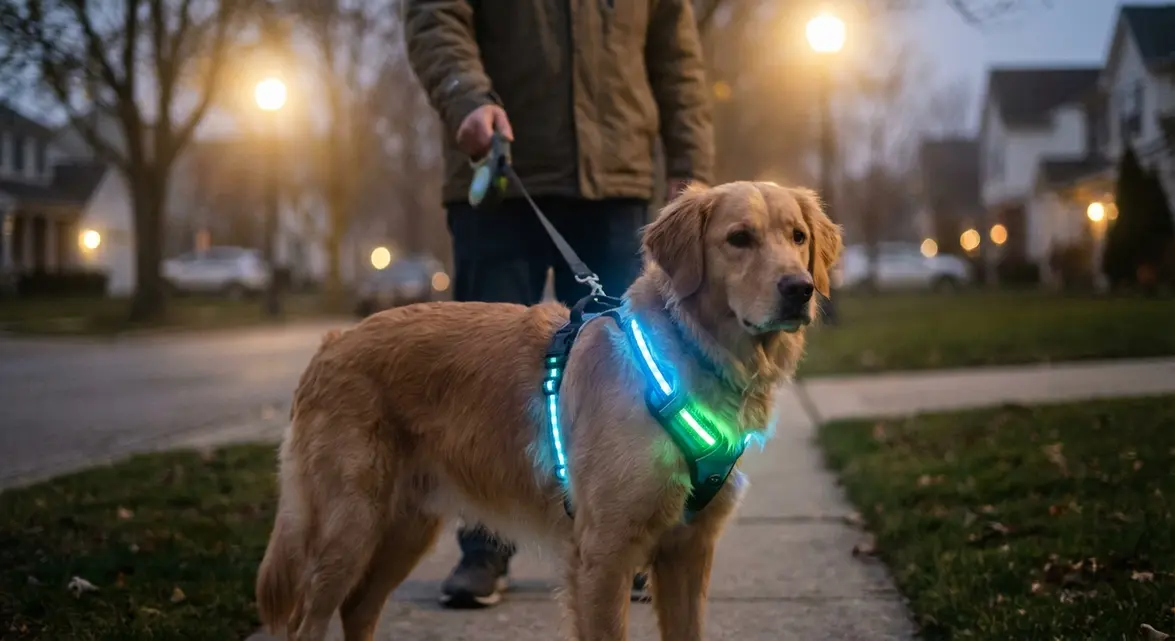
We build and source safety gear for real-world use, and we talk to shop owners and groomers who hear the same story every season: people buy reflective, then realize reflection only works when headlights hit it. A powered light stays visible in dark parks, on unlit sidewalks, and in backyards. This guide breaks down what matters—materials, waterproofing, charging, and fit—so you can stock and sell light up harnesses for dogs that customers trust.
Specs That Matter in Light Up Harnesses for Dogs
When you’re buying for a shelf (or advising a customer), “bright” isn’t enough. Here are the build specs that separate a dependable harness from a gimmick.
1) Lighting: LED placement, brightness, and modes
The best light up harnesses for dogs put light where it counts: on the dog’s chest and back/shoulders, so you get visibility from multiple angles. Side visibility matters more than most people think—drivers approach from the side at intersections, and cyclists often come up from behind.
- Continuous glow vs. flashing: Solid light reads as “steady presence,” while flash grabs attention. Many customers prefer both options.
- Mode switching: Look for simple controls that won’t confuse a pet parent wearing gloves.
- Diffused light strips: A diffused strip is easier to spot than a tiny point light, especially in fog or drizzle.
2) Power: USB charging, battery life, and real-world convenience
USB charging has become the default for a reason: nobody wants to hunt for odd batteries at 9 p.m. Quality light up harnesses for dogs charge via USB (often USB-C now) and deliver usable runtime without needing a daily top-up.
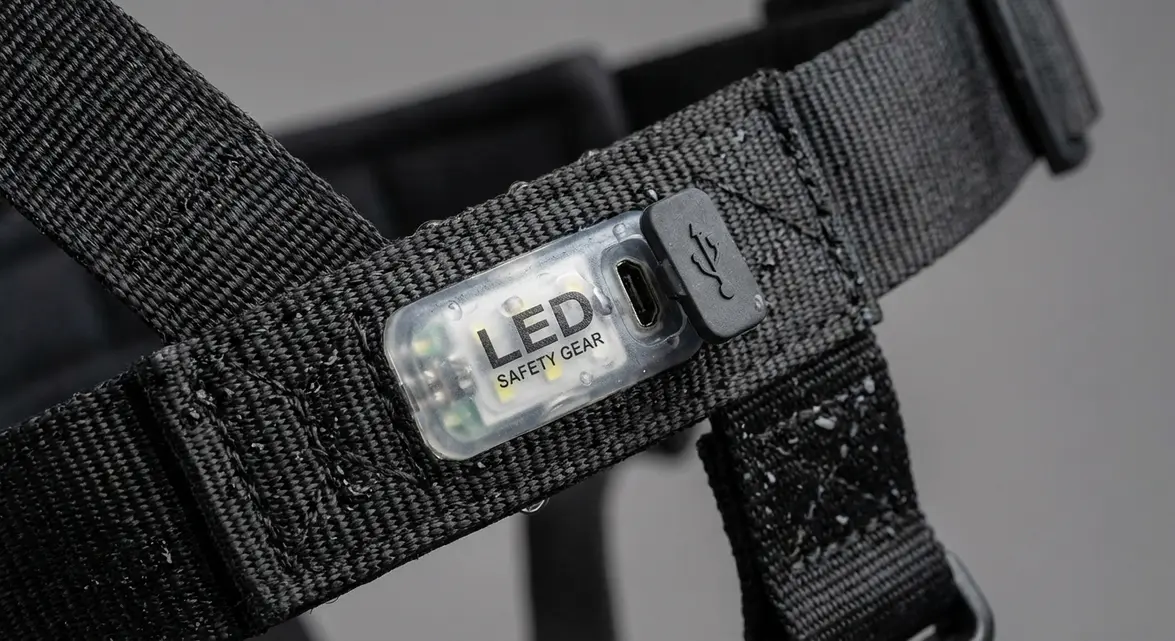
- Charging port protection: A snug rubber flap is small, but it’s the difference between “still works after rain” and “dead after two walks.”
- Battery indicators: Even a basic red/green status light reduces returns and frustration.
- Runtime that matches habits: Many owners walk 20–60 minutes. Aim for several sessions per charge so the harness isn’t “another thing to manage.”
3) Waterproofing: what it really means for evening walks
Customers will ask, “Is it waterproof?” You want a clean answer. With light up harnesses for dogs, water resistance isn’t just about rain—it’s about puddles, wet grass, snow melt, and the harness getting tossed into a damp trunk.
- Sealed electronics: The light module should be protected against splashes and brief exposure to moisture.
- Stitching and webbing: Waterlogged straps can stretch, chafe, and hold odor. Better webbing and edge binding matter.
- Drying behavior: Faster-drying materials reduce mildew smells and extend life in humid regions.
4) Materials: nylon webbing, padding, and hardware that won’t quit
Most harness failures don’t happen in perfect conditions. They happen when a 70 lb Lab lunges at a squirrel, when a husky backs out of a loose neck opening, or when a customer clips a leash in a hurry. Durable light up harnesses for dogs should feel like safety equipment, not costume wear.
- Nylon webbing: Good nylon has consistent weave and stiffness. It resists fraying and won’t stretch out after a wet season.
- Box-stitch reinforcement: The high-stress points (D-ring base, chest strap junctions) should be reinforced so seams don’t creep.
- Hardware quality: Look for sturdy buckles and a welded D-ring. Cheap rings can open or deform under a hard pull.
- Padding placement: Padding should reduce rub behind the front legs and across the sternum—places that get sore on long walks.
5) Fit system: adjustability and escape resistance
The “best” harness is the one that stays on and stays comfortable. For light up harnesses for dogs, fit matters even more because owners tend to use them on darker, higher-risk walks.
- Multiple adjustment points: A harness that adjusts at the neck and girth fits more breeds and cuts down on exchanges.
- Anti-slip design: If the chest piece rides up or the neck opening is too large, some dogs can back out. A snug, correct fit prevents that.
- Size range clarity: Clear measurement charts (girth, neck, weight guidance) reduce buyer confusion.
Benefits: Why Light Up Harnesses for Dogs Sell (and Keep Customers Safe)
For retailers, the story is simple: people don’t buy safety because it’s trendy—they buy it because it solves a problem they can picture. Here’s how light up harnesses for dogs earn their spot in a pet safety aisle.
Better visibility than reflective alone
Reflective trims work when light hits them. A powered light works even when the street is dark and there are no headlights around. That’s the point. Light up harnesses for dogs help drivers, cyclists, and runners register “dog + human” sooner, giving everyone more time to react.
More control than collars for many dogs
Many owners move to harnesses for control and comfort—especially for pullers, short-nosed breeds, or dogs with sensitive necks. Pair that control with visibility and you get a strong everyday safety item. In other words: light up harnesses for dogs aren’t only about “being seen”; they’re also about staying connected to the dog.
Safer routines for early morning and winter schedules
In many regions, half the year means darkness before work and after dinner. Customers aren’t walking less—they’re walking in worse light. Light up harnesses for dogs support consistent exercise routines without relying on street lamps that may not exist in suburban paths, rural shoulders, or new developments.
Useful for more than walks
Shop owners often see repeat purchases because people find extra uses:
- Camping and cabins: A lit dog is easier to track near trees and water.
- Backyard visibility: Handy for evening potty breaks when the yard is unlit.
- Multi-dog homes: Different light colors or modes make it easier to keep track of who’s who.
This “multi-use” angle is why light up harnesses for dogs do well as both a planned purchase and an impulse add-on when displayed near leashes and reflective gear.
Lower return rates when you set expectations
Returns usually come down to fit, charging confusion, or unrealistic expectations about “waterproof.” If your product page and in-store signage call out charging method, approximate runtime, and how to measure, customers get what they expected. That keeps light up harnesses for dogs in the “trusted gear” category instead of “cool but annoying.”
How to Choose Light Up Harnesses for Dogs for Your Shop (Practical Buying Checklist)
If you’re buying wholesale or curating a smaller assortment, you don’t need 20 options. You need the right few. Here’s a straightforward checklist for selecting light up harnesses for dogs that will move and perform.
- Stock the core sizes: Small/Medium/Large is not enough if sizing is inconsistent. Look for a brand with clear girth-based sizing.
- Choose at least one “all-weather” option: Better sealing and quick-dry webbing pays off in rainy or snowy markets.
- Prioritize easy charging: USB charging with a protected port reduces “it stopped working” complaints.
- Offer a no-nonsense color set: Bright colors sell, but don’t skip black/gray options. Many customers want a clean look.
- Merchandise next to leashes and safety lights: Put light up harnesses for dogs where people are already thinking about nighttime walking.
Frequently Asked Questions
Are light up harnesses for dogs better than reflective harnesses?
For dark areas, yes. Reflective material needs an external light source to shine. Light up harnesses for dogs produce their own light, so you get visibility even on unlit trails, parks, or streets.
How long do light up harnesses for dogs stay lit on a charge?
It depends on brightness and mode, but many models are designed to cover multiple walks per charge. For retail, set expectations around “several sessions” rather than promising a specific hour count unless the manufacturer provides verified specs for that exact unit.
Can light up harnesses for dogs get wet in rain or snow?
Most are built for wet conditions, but performance depends on how well the light module and charging port are sealed. A protected port flap and properly enclosed electronics make light up harnesses for dogs far more reliable in real weather.
Do light up harnesses for dogs work for strong pullers?
They can, if the webbing, stitching, and hardware are built for load. Look for reinforced stress points and sturdy metal leash attachment hardware—so the harness won’t fail when a strong dog lunges or hits the end of the leash.
Bottom line: when you select and fit them correctly, light up harnesses for dogs are one of the simplest upgrades you can offer for safer, more confident night walks—and they’re a product customers come back for. The best choice is the one that stays bright, fits right, and keeps working through real weather: light up harnesses for dogs.
🚀 Ready to Upgrade Your Pet Safety Gear?
Thank you for reading our guide.
- 🔹 Looking for bulk pricing? Contact our Wholesale Team
- 🔹 Want to see more? Return to Homepage