
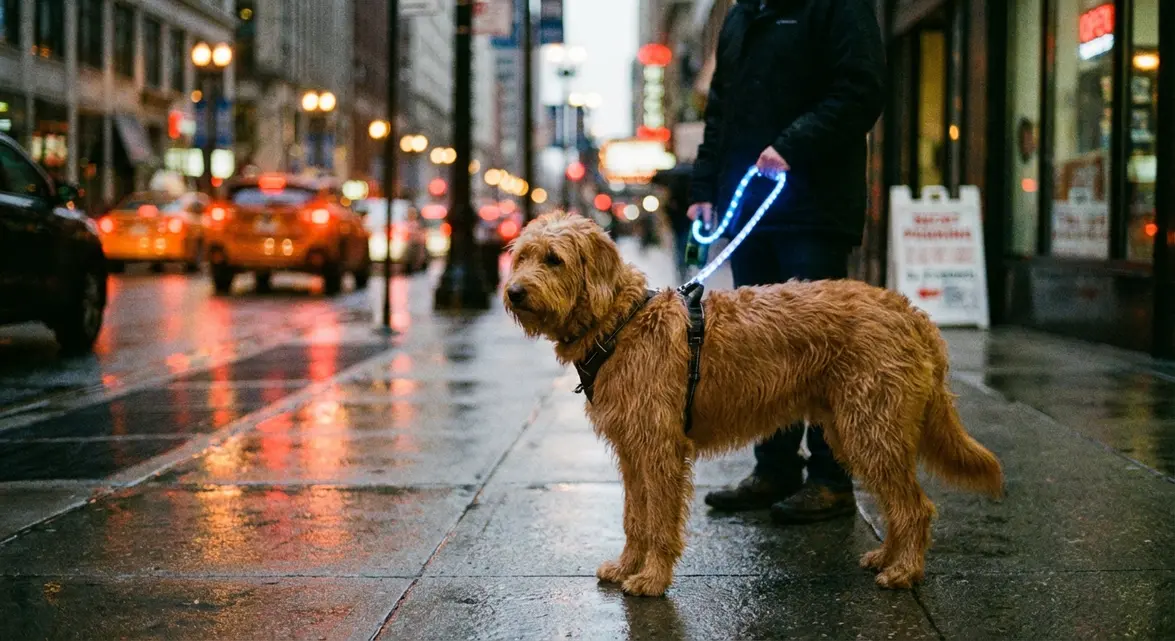
Most pet shops don’t lose customers because they lack “cool” gear. They lose them because a regular walks at dusk turns into a close call—cars cutting corners, cyclists appearing out of nowhere, or a dog spooking and lunging. A dog leash that lights up solves a very practical problem: it makes the dog-and-handler “package” visible from a distance, not just at the last second. That’s the difference between a safe routine and a frantic moment in the roadway.
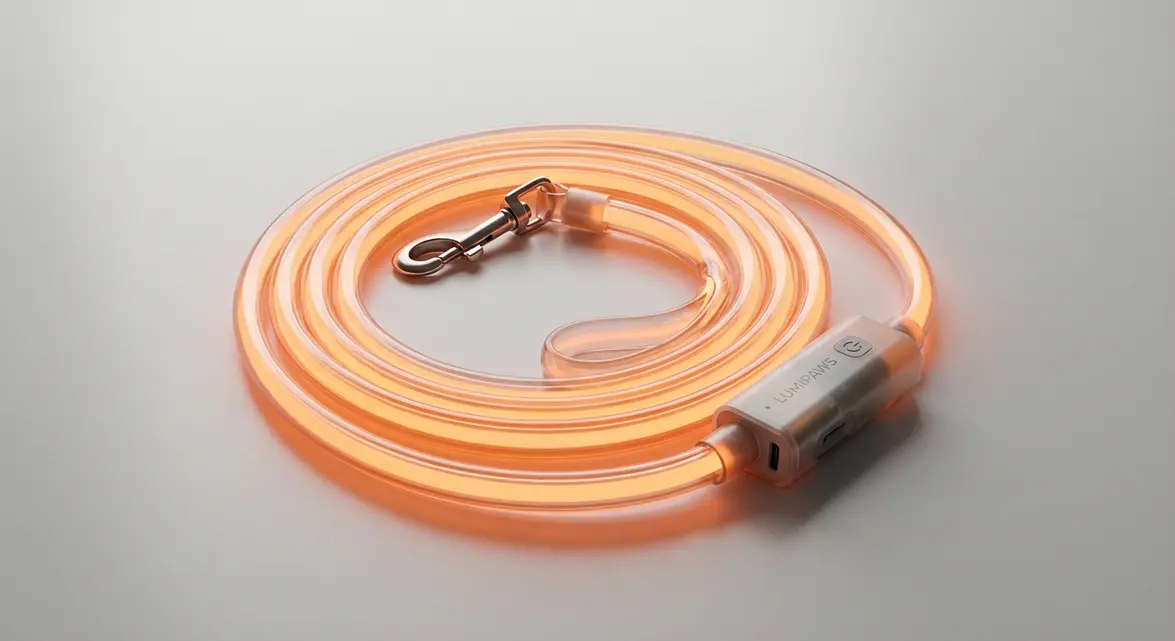
If you stock pet safety products, you already know the pattern. Fall and winter shorten daylight. Dog owners still walk. And the first time they notice drivers can’t see them well, they come looking for better visibility gear. This guide breaks down what to look for in a dog leash that lights up, how to explain it to customers in plain language, and which specs matter when the leash is used daily, gets soaked, and gets yanked by a strong dog.
What a Dog Leash That Lights Up Actually Does (and Doesn’t)
Let’s clear up expectations. A dog leash that lights up isn’t a magic shield. It’s a visibility tool. It helps drivers, cyclists, and other walkers notice movement earlier and judge distance better. That matters most when your customer walks on roads with limited shoulders, in neighborhoods without sidewalks, near driveways, or around busy parks at twilight.
It also helps with everyday control. When the leash line is clearly visible, you reduce trip hazards—especially for families walking with kids, or seniors walking a dog at night. You also cut down on that “Where’s the leash?” moment when the dog circles behind someone.
Specs to Verify Before You Recommend a Dog Leash That Lights Up
Not all light-up leashes are built the same. If you’re buying for resale or planning a bulk order, these are the specs that separate “works once” from “customers come back for the matching collar.” When your staff understands the details, they can sell a dog leash that lights up with confidence.
1) Light type: LED strip vs. fiber optic tube
Most options fall into two categories:
- LED strip style: Bright and direct, often with multiple modes. The risk is weak sealing or a strip that creases and fails after repeated bending.
- Fiber optic style: A light source pushes light through a tube for even glow. It usually looks cleaner and is visible from more angles, which is exactly what customers want from a dog leash that lights up.
For retail, customers gravitate to “even glow.” For working dog handlers, brightness and ruggedness tend to win. Stocking both can cover more of your audience.
2) Brightness and visibility angles
Customers don’t measure lumens. They ask, “Will cars see us?” Your job is to carry products that are visible from the side—not just head-on. A well-designed dog leash that lights up should be noticeable at a glance from multiple angles, especially when the dog is moving.
Tip for sales teams: step back in the store, turn off a few lights, and compare leashes at 20–30 feet. If it looks dim inside, it will be underwhelming outside against headlights and streetlights.
3) Battery system: USB rechargeable vs. disposable
USB rechargeable is the standard customers expect now. A dog leash that lights up with USB charging reduces ongoing cost and avoids the “I can’t find the right batteries” frustration. It also improves repeat usage—people are more likely to recharge than replace specialty batteries.
- Charging port type: USB-C is becoming the default, but you’ll still see Micro-USB. Either can work if the port is protected.
- Charge time and runtime: For real-world use, you want a leash that lasts multiple walks. If a leash only runs an hour, customers will stop trusting it.
- Low-battery behavior: Does it dim gradually or shut off suddenly? Sudden failure is the complaint that triggers returns.
4) Water resistance: why it matters for returns
Night walks and wet weather go together. If the electronics aren’t sealed, the first rainy week turns into a batch of failures. When you see ratings like IPX4, IP65, or IP67, they’re telling you how well the product handles water and dust.
- IPX4: fine for splashes, not great for heavy rain or puddles.
- IP65: handles stronger water exposure; good for daily outdoor use.
- IP67: better sealing; the leash can tolerate accidental immersion—useful when a dog drags the leash through a creek or snowmelt.
When a customer is buying a dog leash that lights up, water resistance isn’t a bonus. It’s protection against disappointment.
5) Tensile strength and hardware: the “70 lb Lab lunge” test
Visibility is only half the product. The leash still has to be a leash. That means it must handle sudden pulls. Materials like nylon webbing are common because they’re strong, flexible, and don’t snap when a 70 lb dog hits the end of the line. But hardware matters just as much.
- Clip: Look for solid metal hardware with a smooth spring action. Cheap clips fail first.
- Stitching: Reinforced stitching at stress points reduces blowouts.
- Handle comfort: A padded handle reduces hand strain during long walks, which makes a dog leash that lights up feel like a “quality upgrade,” not a novelty.
6) Modes: steady, slow flash, fast flash—what customers actually use
Multiple modes can be helpful, but too many can confuse people. In practice, most owners use:
- Steady on for neighborhoods and sidewalks
- Slow flash for roadsides and crossings (more attention-grabbing)
Fast flash can be useful in high-traffic zones, but some customers find it annoying. If you’re choosing one, steady + slow flash is the sweet spot for a dog leash that lights up.
Why Customers Buy a Dog Leash That Lights Up (Benefits You Can Explain in 20 Seconds)
When your staff explains benefits clearly, conversion jumps. Here are the points that land, especially with customers shopping for safety gear:
Better driver awareness at distance
Reflective gear only works when light hits it at the right angle. A dog leash that lights up emits its own light, so it’s visible even in areas where headlights aren’t directly hitting the leash. That matters at intersections, on curving roads, and near parked cars.
Visible leash line = fewer trips and tangles
Owners often trip because the leash disappears in the dark. A dog leash that lights up keeps the line visible when dogs weave, when multiple pets are walked at once, or when a child helps with the walk.
Less stress for nervous dogs and cautious owners
Some dogs get spooked by sudden movement. When everyone can see the dog and the leash line clearly, you reduce surprise encounters. That translates to fewer yanks, fewer dropped leashes, and calmer walks. The product is simple, but the impact is real.
Helps with “visibility stacking”
The best setups use layers: a reflective harness or vest, a lighted collar, and a dog leash that lights up. If one element is covered by a coat or blocked by the dog’s body, another still shows. This is an easy cross-sell for stores: leash + collar, or leash + harness.
Choosing Inventory: What to Stock (and What to Avoid)
If you’re selecting products for a shop, grooming salon retail corner, or online store, think in terms of fit, durability, and customer habits. A dog leash that lights up is a repeat-use item, which means weak designs show up fast in reviews.
Stock: multiple lengths and a familiar feel
Most customers buy the length they already use. Common options include 4 ft for tighter control and 6 ft for everyday walks. If the leash feels stiff or heavy, it won’t become the go-to choice—even if it looks bright on the shelf. A dog leash that lights up should still feel like a normal, reliable leash in the hand.
Stock: bright colors and clear “on/off” feedback
Customers want a product that’s easy. A simple button, clear mode changes, and an indicator light for charging can cut down on “it doesn’t work” returns. Bright body colors help visibility in twilight, while the LEDs handle true darkness.
Avoid: exposed ports and flimsy housings
If the charging port is open and unprotected, water finds it. If the electronics housing feels like brittle plastic, winter drops crack it. These are the details that make a dog leash that lights up either a five-star product or a customer service headache.
How to Sell a Dog Leash That Lights Up Without Overpromising
This is where B2B retail shines. You’re not just selling a leash; you’re solving a problem. Keep the pitch simple and honest:
- Start with the scenario: “If you walk after dinner, this makes you easier to see.”
- Explain the why: “It emits light, so you’re not relying on headlights.”
- Back it up: Mention charging, water resistance, and hardware strength.
Customers appreciate straightforward advice. When you set expectations correctly, they’ll come back for a matching collar or a second dog leash that lights up for the car.
Care Tips: Make It Last Longer
Most failures are preventable. Add a small care card or train staff to share quick tips at checkout:
- Charge before the first use, then top up weekly if they walk often.
- Wipe down after wet walks; avoid soaking the charging port area.
- Don’t store in a freezing car overnight—cold reduces battery performance.
- Inspect the clip and stitching monthly, just like any leash.
When owners treat a dog leash that lights up like serious gear, it performs like serious gear.
Frequently Asked Questions
Is a dog leash that lights up better than a reflective leash?
They do different jobs. Reflective leashes depend on external light (like headlights). A dog leash that lights up emits light, so it stays visible in darker areas and from more angles. For best results, many owners use both: reflective gear plus an illuminated leash.
How long does a dog leash that lights up usually stay on per charge?
It varies by brightness and mode. Steady-on typically drains faster than flashing. For customer satisfaction, look for a dog leash that lights up that can cover several evening walks on one charge, not just a single outing.
Will a dog leash that lights up work in the rain?
It should—if the electronics are properly sealed. Water resistance ratings (like IP65 or IP67) reduce the risk of failures during wet weather. If rain is common in your area, it’s worth prioritizing a dog leash that lights up with stronger sealing.
Is a dog leash that lights up safe for strong pullers?
It can be, but only if the leash is built on a strong core (often nylon webbing) with quality stitching and a solid metal clip. The lighting feature shouldn’t replace strength; it should be added on top of a leash design that can handle real pulling.
🚀 Ready to Upgrade Your Pet Safety Gear?
Thank you for reading our guide.
- 🔹 Looking for bulk pricing? Contact our Wholesale Team
- 🔹 Want to see more? Return to Homepage
Conclusion: If your customers walk in low light, stocking and recommending a dog leash that lights up is one of the simplest, most practical upgrades you can offer—because being seen sooner is what prevents close calls.