
Night walks are great—cooler air, quieter streets, fewer distractions. They’re also when visibility problems stack up fast. A black dog on a dark sidewalk, a driver glancing down at a screen, a cyclist cutting a corner. That’s why a light up dog harness isn’t a novelty item anymore. It’s safety gear, plain and simple.
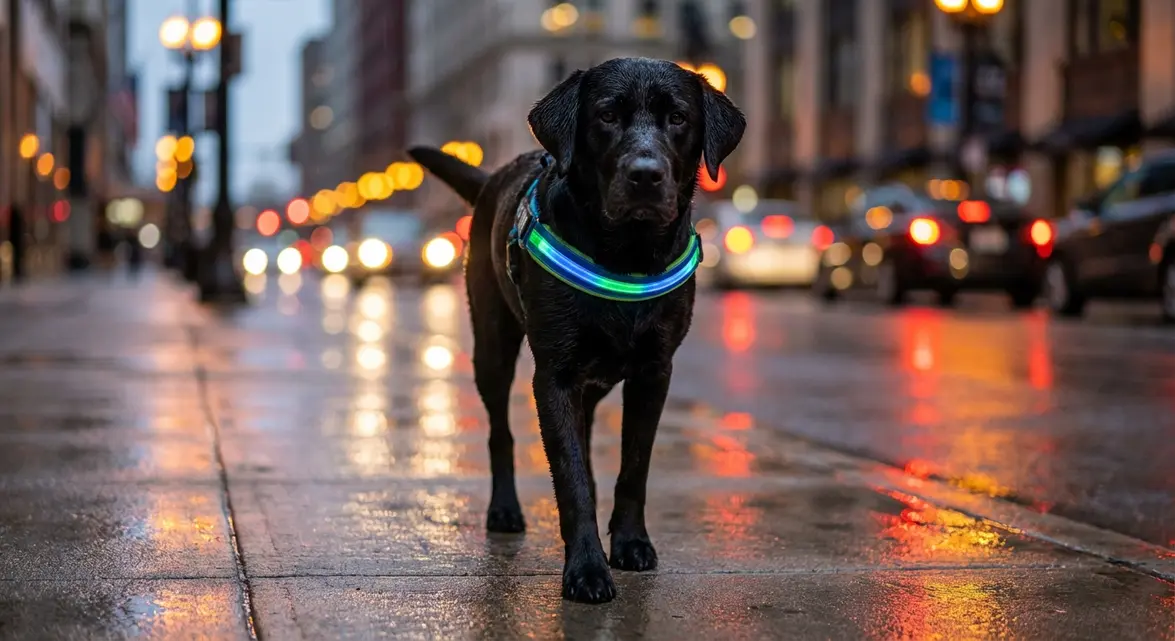
In this guide, we’ll break down what actually matters when you’re choosing a light up dog harness for real-world night use. We’ll cover LED performance, waterproof ratings, charging systems, fit and comfort, and what retailers and groomers should look for when stocking them. No fluff—just the specs and the reasons behind them.
What Makes a Light Up Dog Harness “Good” for Night Safety?
Most customers start by asking, “Is it bright?” Brightness matters, but it’s not the whole story. A night-safe light up dog harness needs to stay visible through movement, weather, and daily wear. Here’s what to check.
1) LED visibility: brightness, coverage, and angles
LED strips can be mounted in different ways—thin piping, wide panels, or segmented points. For safety, you want coverage, not just a little dot of light. A light up dog harness with lighting across the chest and back is easier to spot from multiple angles, especially when your dog turns sideways at a crosswalk.
- Wide light surface: Makes the dog look “bigger” in a driver’s field of view.
- High contrast color (often green/blue): Typically reads better against dark coats than red alone.
- Multiple modes: Steady-on is best for constant recognition; flash modes can grab attention in high-traffic areas.
For shops: customers will compare in-store by turning the lights down or covering it with their hand. If your product only looks good in perfect lighting, returns follow.
2) Waterproofing: what “water-resistant” really means
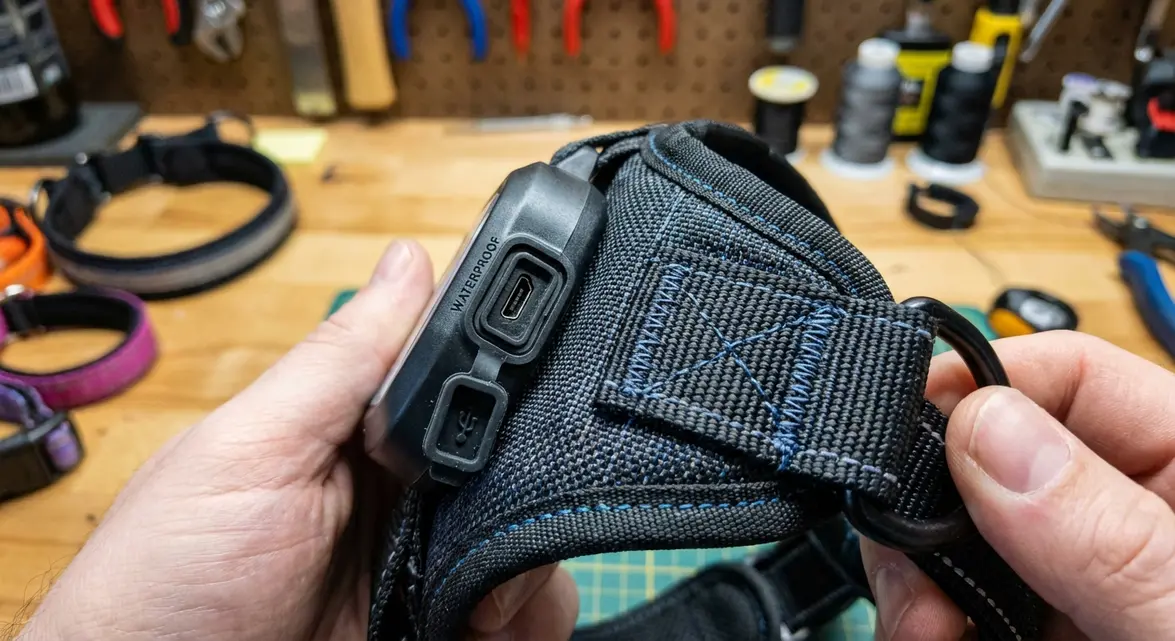
Rain happens. So does wet grass, puddles, and the occasional lake launch. If the electronics are exposed, the harness becomes a short-term item. When a product lists a waterproof rating like IP67, it means the electronics are protected against dust and can handle temporary immersion. That matters because the LED module is the failure point on most budget models.
A well-built light up dog harness keeps the battery and charging port sealed. That means fewer dead units, fewer complaints, and fewer “it worked for two weeks” reviews.
3) Battery and charging: USB rechargeable vs. replaceable batteries
Customers love the idea of rechargeable gear—until charging becomes annoying. The best light up dog harness setups use a standard USB connection (or USB-C) and provide clear runtime. Ask these questions:
- Runtime on steady-on: If it lasts only 1–2 hours, it won’t cover a week of short walks.
- Charge time: Long charge times lead to “forgot to charge it” situations.
- Port protection: A rubber plug or sealed housing helps prevent corrosion and loose connections.
For B2B buyers: rechargeable units reduce ongoing “battery replacement” friction for customers, which improves repeat purchases on accessories instead of returns on the harness.
4) Strap materials and stitching: nylon, webbing width, and stress points
Harnesses fail at the seams and buckles—not in the marketing photos. Strong nylon webbing and reinforced stitching matter because dogs pull. A 70 lb Lab lunging at a squirrel can snap weak hardware fast. A light up dog harness should be built like a harness first, and a lighting product second.
- Wide chest straps: Distributes pressure and reduces rubbing.
- Bar-tack stitching: Extra reinforcement at joints.
- Metal D-rings (or high-grade polymer): More reliable than thin, soft metal rings that bend.
5) Fit and adjustability: comfort is safety
If a harness twists, rides up, or pinches, dogs will fight it. Then owners stop using it, and your “safety product” becomes a drawer product. A light up dog harness needs:
- Multiple adjustment points: At least neck and chest; ideally four points.
- Clear sizing guidance: Measuring charts reduce returns.
- Padding in the right places: Chest and underarm areas are common rub zones.
Light Up Dog Harness Specs: What to List (and Why Buyers Care)
If you sell online or stock in-store, your spec list is your salesperson. A solid light up dog harness product page should translate “tech terms” into real outcomes.
Lighting modes
Most buyers expect at least three: steady, slow flash, fast flash. Explain what each does. Steady makes the dog easy to track. Flash cuts through busy backgrounds (traffic, storefronts, other lights). A quality light up dog harness won’t flicker unevenly or dim after 20 minutes.
Visibility range
Brands often claim big numbers. In practice, the useful range depends on fog, rain, and ambient lighting. Instead of overpromising, aim for honest language: “high visibility for neighborhood streets and parks.” If you’re a retailer, honest positioning builds trust and reduces “not as bright as expected” returns on a light up dog harness.
Waterproof rating (IPX vs IP)
Customers see “waterproof” and assume they can rinse it under a tap. If your light up dog harness is rated IP67, say what it means: sealed against dust and can handle accidental dunking. If it’s IPX4, say: rain and splashes, but don’t submerge it. Clear expectations = fewer problems.
Recharge system and battery runtime
Put runtime front and center. People walk dogs daily. If a light up dog harness lasts 6–10 hours on steady mode, that’s strong. If it’s 2–3 hours, it still may work—but position it for shorter walks or “visibility on demand.”
Care instructions
Owners will wash gear. A good listing tells them whether the LED module removes, whether it’s wipe-clean only, and how to dry it. The more realistic the care guidance, the longer your light up dog harness stays in service.
Benefits of a Light Up Dog Harness (For Owners and For Stores)
There’s a reason LED gear keeps growing as a category: it solves a real problem. Here’s how to explain the value without sounding like hype.
Better visibility than reflective-only gear
Reflective piping is useful, but it needs a headlight or strong light source hitting it. LEDs are active light. That means a light up dog harness can be seen even when a car’s headlights aren’t pointing directly at the dog yet—like on curved roads, driveways, and parking lots.
Hands-free safety compared to clip-on lights
Clip-on lights fall off. Collars twist. Leashes tangle. A light up dog harness keeps light centered on the dog’s body, which is what drivers and cyclists are actually trying to spot. It also reduces the “where did the light go?” problem when dogs shake or roll.
More control with a harness—especially for pullers
Even if visibility is the main purchase reason, customers get a secondary benefit: better handling. A properly fitted harness can reduce strain on the neck versus collar-only walking. That makes the light up dog harness easier to justify as a premium product, not a seasonal impulse buy.
Lower return rates when the product is specced correctly
For retailers, the biggest pain points are dead LEDs, broken buckles, and confusing sizing. When you choose a light up dog harness built with sealed electronics, strong stitching, and clear size charts, you cut returns and keep customers coming back for matching accessories.
Great add-on for grooming, boarding, and training businesses
Businesses that handle dogs after dark—boarding facilities, trainers running evening classes, dog walkers—can use a light up dog harness as both safety gear and a visible “we take this seriously” signal to clients. That’s a trust builder.
How to Choose the Right Light Up Dog Harness (A Practical Checklist)
If you’re helping a customer choose, or you’re selecting SKUs for your shop, use this quick filter.
Step 1: Start with the dog’s size and coat type
- Small dogs: Prioritize lightweight build and smooth strap edges to prevent rubbing.
- Medium to large dogs: Prioritize hardware strength, webbing width, and reinforced stitching.
- Dark coats: LED coverage matters even more; go for larger light panels.
A light up dog harness that looks “fine” on a 15 lb dog may not hold up on an 80 lb dog that pulls.
Step 2: Match the lighting mode to the environment
- Suburbs/parks: Steady mode for consistent tracking.
- Urban streets/parking lots: Flash mode to pop against competing lights.
- Off-leash training (where allowed): Wide coverage and long runtime.
Step 3: Don’t skip waterproofing
If a customer walks year-round, “splash resistant” may not cut it. A sealed, waterproof light up dog harness is the difference between a good review and a chargeback.
Step 4: Demand clear sizing and an easy exchange policy
Sizing confusion is the #1 reason harnesses get returned. If you sell a light up dog harness, include a measurement diagram and tell buyers to measure chest girth with a little slack. Retailers should keep a sample set for fit checks.
Common Mistakes That Make a Light Up Dog Harness Disappointing
Most negative reviews come from predictable issues. Avoid them, and you’ll do well in this category.
- Buying based on “cute” design: Looks don’t matter if the harness slides or the LED dies.
- Ignoring where the leash clips: Back-clip is common; front-clip can help with pullers if designed well.
- Assuming reflective = visible: Reflective helps, but it’s not active light like a light up dog harness.
- Not checking battery access: If charging is annoying, owners stop using it.
Frequently Asked Questions
Are light up dog harness products safe for dogs?
Yes, when the electronics are sealed and the harness fits properly. Choose a light up dog harness with protected wiring, smooth strap edges, and a secure battery housing so nothing pokes or rubs.
How long does a USB rechargeable light up dog harness last?
Runtime depends on LED output and mode. Many models run several hours on steady and longer on flash. For daily walkers, look for a light up dog harness that clearly states runtime and has a protected charging port.
Can I use a light up dog harness in heavy rain?
If it’s properly sealed, yes. Look for waterproof ratings and avoid exposed ports. A light up dog harness with stronger waterproofing holds up better through wet seasons and reduces failure rates.
Does a light up dog harness replace a reflective leash or collar?
It’s best as part of a visibility setup. A light up dog harness provides active light on the dog’s body, while reflective elements on the leash and your own clothing help drivers see the whole walking team.
Conclusion: Night safety comes down to visibility, durability, and comfort. Choose a harness that’s built for pulling, sealed for wet weather, and bright enough to be recognized fast. When you pick the right light up dog harness, you’re not just selling a product—you’re reducing risk on every evening walk with a light up dog harness.
🚀 Ready to Upgrade Your Pet Safety Gear?
Thank you for reading our guide.
- 🔹 Looking for bulk pricing? Contact our Wholesale Team
- 🔹 Want to see more? Return to Homepage