
Night walks are great for busy customers, hot climates, and dogs that get overwhelmed in daytime traffic—but they come with one non‑negotiable problem: drivers can’t avoid what they can’t see. If you sell pet gear, groom, board, train, or run a retail shop, you’ve probably had customers ask the same thing: “What’s the safest setup for walking after dark?” A light up dog harness rechargeable is one of the most practical answers because it puts visibility on the dog’s body (not just the collar) and it’s ready again tomorrow with a simple USB charge.
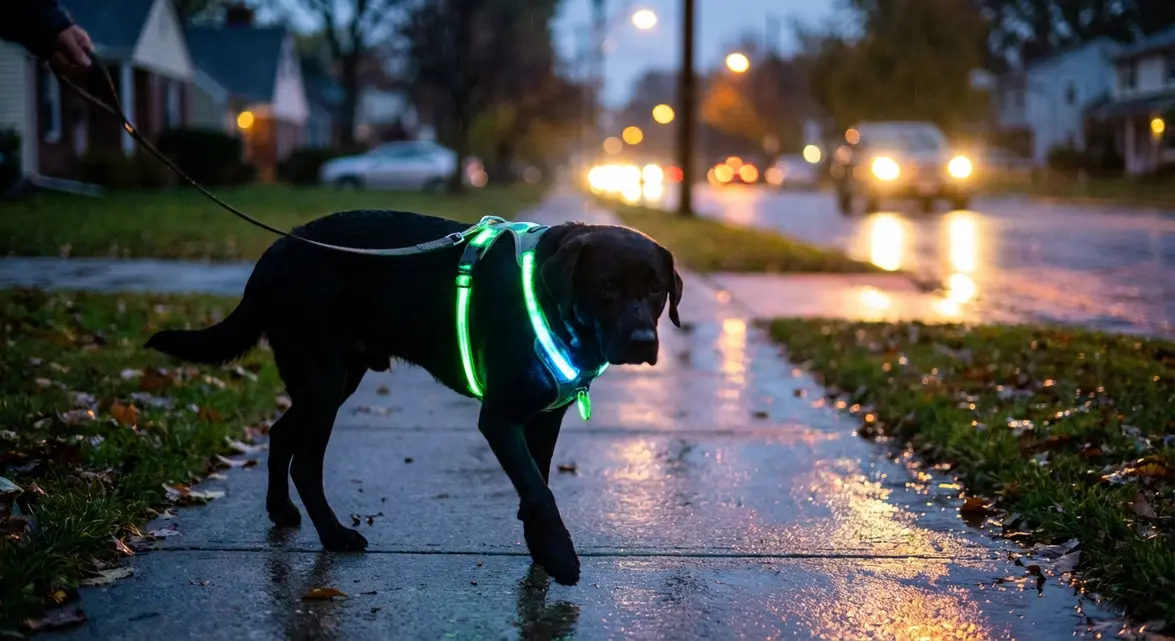
This guide is written for B2B buyers and pet businesses that need products that hold up in the real world—rain, pulling, rolling, daily use, and the occasional “my Lab thinks the harness is a tug toy.” We’ll cover what to look for in a light up dog harness rechargeable, which specs actually matter, and how to choose the right mix for your customer base.
What Makes a Light Up Dog Harness Rechargeable Worth Stocking?
A lot of “glow” products look good in a listing photo and disappoint in week two. When you’re choosing a light up dog harness rechargeable for resale or for your facility dogs, focus on the basics that reduce returns: brightness, battery life, durability, fit, and ease of charging.
1) Brightness and visibility angle
Brightness isn’t about blinding light; it’s about being seen from far away and from the side. A quality light up dog harness rechargeable should be visible to drivers, cyclists, and runners from multiple angles—front, side, and rear. Look for wide light strips or panels, not tiny dots that disappear when the dog turns.
Practical test: if you stand 50–100 feet away in a parking lot at dusk and the harness blends into the dog’s coat, it’s not doing the job. Dark coats expose weak lighting fast.
2) Lighting modes that match real behavior
Steady on is great for neighborhoods. Slow flash can be more noticeable near roads. Fast flash is useful in heavy traffic but can annoy some dogs or owners. The best light up dog harness rechargeable options keep controls simple—one button, easy cycle, no tiny switches that break.
3) Battery type, run time, and “charge fatigue”
USB rechargeable is a win for customers who hate buying coin cells. But not all batteries are equal. A good light up dog harness rechargeable should offer:
- Consistent run time (not “bright for 15 minutes, dim for the next hour”).
- Predictable charging (so users don’t have to babysit it).
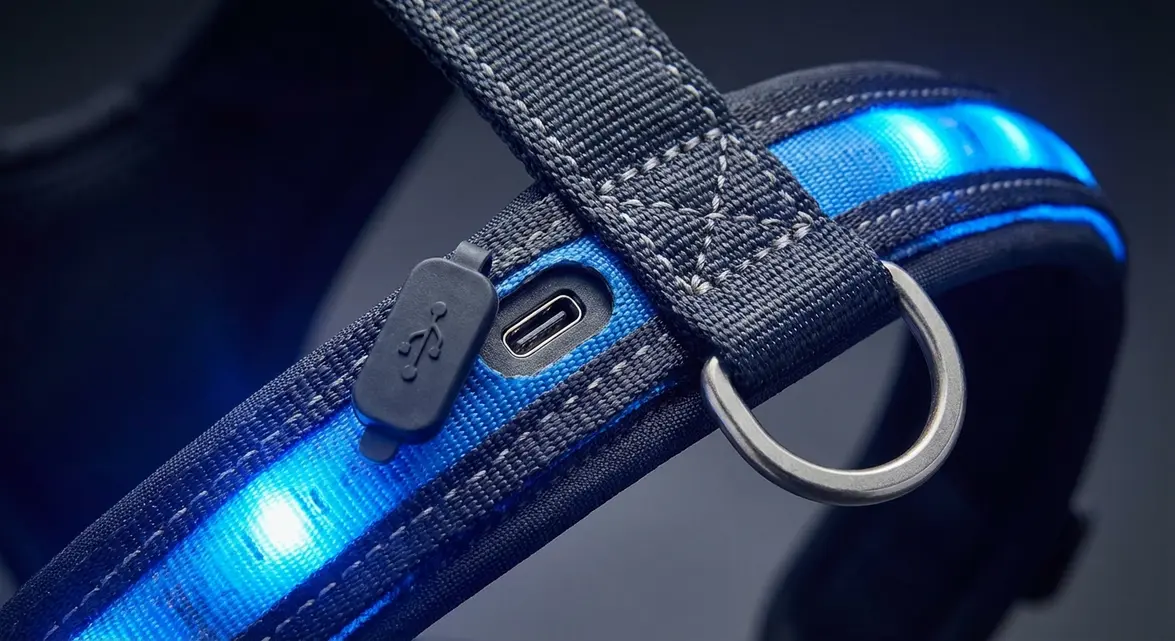
- A protected port (rubber cover or sealed design) to reduce water and grit intrusion.
For shops: shorter run time leads to the most common complaint—“It worked the first few walks.” If you’re curating a reliable wall, prioritize products with clear run-time claims and stable brightness output.
4) Waterproofing that matches how dogs actually move
Customers hear “water-resistant” and assume it’s fine. Then the dog runs through wet grass, rolls in slush, or gets caught in rain—and the electronics fail. If you can get documentation, look for IP ratings (for example, IPX6/7 range). That matters because a light up dog harness rechargeable isn’t just exposed to droplets; it’s exposed to pressure, splashes, mud, and repeated drying.
If no IP rating is listed, look for build cues: sealed seams around the light strip, covered charging port, and a housing that doesn’t flex like a thin toy.
5) Harness materials and stitch strength
Lighting isn’t safety if the harness snaps. For a light up dog harness rechargeable, the fabric and hardware need to handle pulling loads and friction points:
- Nylon webbing with tight weave holds up to daily wear and doesn’t stretch like cheap blends. When a 70‑lb dog lunges, you want webbing that stays firm.
- Reinforced stitching at D-rings and adjustment points prevents “stitch creep” where threads slowly tear.
- Quality buckles should lock cleanly and resist cold-weather brittleness.
Retail note: durability is your margin protector. A light up dog harness rechargeable that survives a season of use becomes a repeat customer, not a refund request.
6) Fit range and adjustability (the quiet profit driver)
Fit is where returns are born. A high-performing light up dog harness rechargeable needs wide adjustment ranges and clear sizing. Look for:
- Neck and chest adjustments so it sits correctly on deep-chested breeds and barrel-shaped breeds.
- Comfort padding in pressure zones (sternum and armpit area) so dogs don’t chafe on longer walks.
- Easy on/off for older dogs and customers who don’t want to wrestle a harness over a dog’s head.
Key Specs to Compare When Buying a Light Up Dog Harness Rechargeable
If you’re purchasing for a store, facility, or online catalog, you need a quick comparison checklist. Here are the specs that matter most in a light up dog harness rechargeable, plus why each one affects safety and satisfaction.
LED placement and coverage
More coverage generally equals more visibility. A strip along the back is helpful, but side illumination is what makes a dog visible at intersections and when crossing streets. The best light up dog harness rechargeable designs build visibility into the body line—where motion helps the light catch attention.
Control button location
Buttons should be easy for a human hand with gloves, and hard for a dog mouth to chew. Top-of-back placement is common and practical. If the button is tucked into a fold, customers will complain. If it’s exposed on an edge, dogs will bite it. A well-designed light up dog harness rechargeable finds the middle ground.
Charging format
USB charging is standard, but note the difference between “USB rechargeable” and “USB included.” Customers appreciate when charging is straightforward. For B2B, consider whether your target customers prefer USB-C or Micro-USB. USB-C is becoming the default because it’s durable and reversible—less port damage and fewer “it won’t charge” claims on a light up dog harness rechargeable.
Battery safety and housing
A proper battery housing reduces swelling risk and helps the product survive drops. You want a casing that’s not easily punctured if a dog rolls on concrete. This is one of the least glamorous parts of a light up dog harness rechargeable, and one of the most important.
Weight distribution
If a harness is too heavy in the wrong spot, dogs resist wearing it. Electronics should not create a “pendulum” effect. Look for balanced designs where the lighting component sits flat on the body. A light up dog harness rechargeable should feel like a normal harness—just brighter.
Hardware: D-rings and leash attachment options
Some customers want a back-clip. Others need front-clip for training and pull management. If your audience includes trainers, a light up dog harness rechargeable with dual attachment points broadens your market and reduces “wrong product” returns.
Business Benefits: Why Customers Choose a Light Up Dog Harness Rechargeable
Visibility gear sells because the problem is obvious the moment daylight fades. But the strongest sales message isn’t “cool lights.” It’s practical safety, fewer close calls, and less stress for owners.
Better visibility than a collar light alone
Collar lights can spin under the neck or disappear behind fluff. A light up dog harness rechargeable stays centered on the body, so the light faces outward and moves with the dog’s stride. That motion catches attention and helps drivers judge distance.
Rechargeable convenience builds repeat use
Customers are more likely to use a product nightly if it’s easy to recharge. A light up dog harness rechargeable that charges like a phone becomes a habit. And habits are what keep dogs safe, not one-time purchases.
Better control and comfort for dogs
A harness spreads pressure across the chest and shoulders rather than focusing on the neck. For small dogs, seniors, brachycephalic breeds, and strong pullers, that’s a big deal. Pair that with lighting and you have a light up dog harness rechargeable that works for both safety and handling.
Lower liability concerns for facilities
If you run a boarding facility, daycare, or training operation, visibility reduces risk during evening potty breaks and roadside transitions. A light up dog harness rechargeable is an easy policy upgrade: staff can spot dogs quickly, and drivers can spot your team near entrances and parking areas.
How to Choose the Right Light Up Dog Harness Rechargeable for Your Customer Base
Not every shop sells to the same crowd. Here’s a practical way to pick SKUs that move.
For urban and suburban walkers
Go for high visibility and comfort. Customers in neighborhoods want a light up dog harness rechargeable that’s quick to put on, bright near crosswalks, and comfortable for 20–40 minute walks.
For hikers, campers, and rural customers
Durability and weather resistance rise to the top. These buyers need a light up dog harness rechargeable that handles mud, creek splashes, and rough brush. Prioritize reinforced webbing, solid buckles, and a protected charging port.
For small dogs and seniors
Focus on lightweight build and chafe-free design. A bulky unit can irritate a small dog fast. A good light up dog harness rechargeable should sit flat, pad the chest, and adjust down without leaving long loose strap tails.
For strong pullers and training clients
Strength and leash options matter more than extra modes. Look for a light up dog harness rechargeable with strong stitching, metal leash rings, and (ideally) a front-clip option so trainers can manage pulling without relying on the lights as a gimmick.
Merchandising Tips: Help the Customer Buy the Right Fit
If you’re selling in-store, the best conversion tool is a simple fitting process. Post a sizing chart and train staff to ask two questions: dog weight and chest girth. Explain that a light up dog harness rechargeable should sit behind the front legs, not in the armpit. That one detail eliminates a lot of “it rubs” complaints.
Online? Include clear photos showing strap layout and where to measure. If you can, add a short line about coat types—thick fur can hide narrow light strips, so steer fluffy breeds toward wider illumination designs.
Maintenance and Care (So It Lasts Past Week Two)
A light up dog harness rechargeable will last longer when customers treat it like electronics, not a chew toy.
- Wipe down after wet walks so grit doesn’t work into seams and the charging port cover stays clean.
- Charge before it’s dead. Deep discharge over and over can shorten battery life in many devices.
- Don’t store in freezing cars for long periods. Cold temps can reduce battery performance and make plastics brittle.
- Check straps monthly—especially if the dog pulls. Stitching and buckles should stay tight and square.
Frequently Asked Questions
How long does a light up dog harness rechargeable typically last on a charge?
It depends on brightness and mode, but most run longer on steady or slow flash than on high-output settings. For retail, prioritize products that state run time clearly and maintain brightness throughout the cycle.
Is a light up dog harness rechargeable safe in rain?
Many are fine for rain and wet grass if the charging port is protected and the electronics are sealed. If you need dependable weather use, choose models with documented water resistance and sturdy housing.
Should I recommend a harness light or a collar light?
For visibility, harness lighting is usually easier to see from the side and stays centered on the dog’s body. Many owners still use both, but a light up dog harness rechargeable is often the better “one-item” safety choice.
What’s the biggest cause of returns with light-up harnesses?
Sizing and fit. Encourage customers to measure chest girth and adjust straps so the harness sits behind the front legs. A well-fitted light up dog harness rechargeable is more comfortable and more visible.
🚀 Ready to Upgrade Your Pet Safety Gear?
Thank you for reading our guide.
- 🔹 Looking for bulk pricing? Contact our Wholesale Team
- 🔹 Want to see more? Return to Homepage
Conclusion: If you want a product customers will actually use every night—and come back to buy again—stock a light up dog harness rechargeable that’s bright, durable, comfortable, and easy to charge.