
Night walks shouldn’t feel like you’re rolling the dice with traffic, cyclists, or low‑light corners of a park. A light up dog leash and harness gives you and your customers something simple that works: visibility where it counts, right at the dog’s level, without relying on streetlights or reflective paint alone.
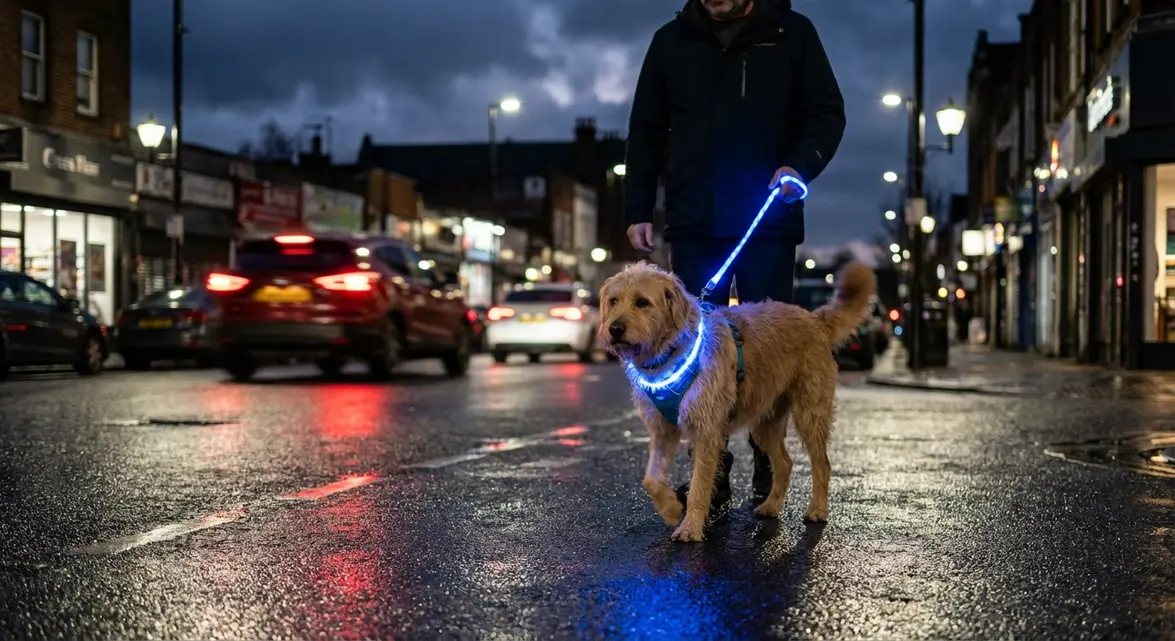
If you stock pet safety gear—or you run a rescue, training facility, boarding kennel, or groom shop—you already know the pattern. Clients buy a cute collar, skip the safety add‑ons, and then call you after a close call. We’ve seen it too many times. This guide breaks down what to look for in a light up dog leash and harness, which specs actually matter in real use, and how to choose options that hold up when a 70‑lb Lab lunges or a Husky decides it’s time to pull.
Why a Light Up Dog Leash and Harness Matters After Dark
Reflective thread is helpful, but it has a limitation: it needs a beam of light aimed at it to “activate.” LEDs don’t. A light up dog leash and harness creates active visibility—steady illumination that drivers and riders notice earlier and from more angles.
That early notice is the entire point. At 25–35 mph, a driver can cover a lot of ground in a second. If the dog is wearing dark fur, walking near shadows, or crossing driveways, your margin for error shrinks fast. Active lighting buys time for everyone to react.
Core Specs to Check Before You Stock a Light Up Dog Leash and Harness
Not all LED gear is built the same. Below are the decision points that separate “looks good on a product page” from “works every night for months.” If you’re buying for a store, a shelter program, or a training business, these specs protect your reputation.
1) LED brightness and placement
Brightness isn’t just about being flashy. It’s about being readable at a distance and from the side, where most near‑misses happen. On a light up dog leash and harness, you want LEDs that are visible across the chest and along the body—not just a tiny light at the back.
- Harness placement: Chest and side visibility helps with head‑on and cross‑traffic situations.
- Leash placement: A lit leash helps drivers see the human‑to‑dog connection, especially when the dog steps off a curb first.
2) Light modes you’ll actually use
Most products offer steady, slow flash, and fast flash. In practice, steady mode is easiest for drivers to interpret (and less annoying for neighbors). Flashing can help in fog, rain, or high‑clutter areas like city sidewalks. A quality light up dog leash and harness should switch modes with a button that’s easy to press with gloves on.
3) Battery type and recharge system (USB matters)
Disposable batteries are a silent profit killer. Customers don’t like replacing them, and businesses hate returns when the unit “stops working” because the batteries died. A USB rechargeable light up dog leash and harness is easier to maintain and more likely to be used consistently.
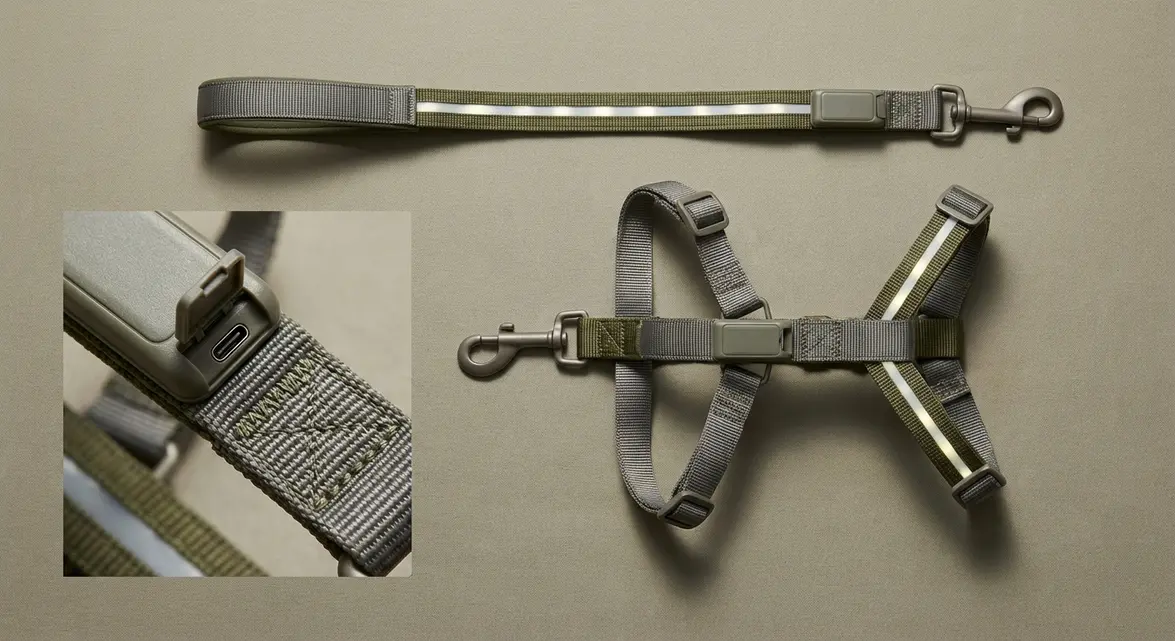
- USB‑C is ideal because it’s now the common cable for phones and accessories.
- Charge indicators reduce confusion (“Is it charging or not?”).
- Runtime should cover multiple walks—think a few nights, not just one outing.
4) Water resistance (what IP ratings really mean)
Water resistance isn’t marketing fluff. It decides whether the gear survives wet sidewalks, snow, and the inevitable puddle jump. If you see an IP rating, here’s the plain language:
- IPX4: Handles splashes. Fine for light rain, not for soaking.
- IP65: Better protection against water jets and dust—good for regular outdoor use.
- IP67: Can survive brief immersion. That matters if a dog goes belly‑deep in a creek or the leash gets dropped in a puddle.
For a light up dog leash and harness, IP65+ is where complaints drop off. If your customers walk in real weather, aim higher.
5) Material strength: nylon webbing, stitching, and hardware
LEDs are great—until the leash snaps. The backbone of a dependable light up dog leash and harness is still the webbing, stitching, and metal.
- Nylon webbing is popular because it resists abrasion and holds tensile strength, so it won’t fray quickly on concrete edges.
- Reinforced stitching prevents failure at stress points (D‑ring area, chest plate joins).
- Clips and D‑rings should be rust‑resistant; cheap plated hardware pits fast in winter salt.
Practical test: if you wouldn’t trust it on a strong puller, don’t let the LEDs distract you into stocking it.
6) Fit range and adjustability (returns live here)
Fit issues create the highest return rates. A harness that rides up into the dog’s armpits will chafe; one that’s too loose can twist and aim the lights away from traffic. A well‑designed light up dog leash and harness offers multiple adjustment points and clear sizing guides.
- Look for neck and chest adjustments so you can dial in a secure but comfortable fit.
- Consider step‑in options for dogs that dislike overhead harnesses.
- Make sure buckles are strong and easy to operate.
Real-World Benefits: What Your Customers Notice First
Specs are one thing. What sells is the day‑to‑day payoff. Here’s why a light up dog leash and harness becomes a repeat purchase and a recommendation—especially for households with kids walking the dog, older clients, or busy city streets.
Safer street crossings and driveway zones
Driveways, curb cuts, and parking lots are where visibility changes quickly. LEDs create a moving reference that drivers register. A light up dog leash and harness also helps the handler keep track of the dog’s exact position when the dog drifts ahead, sniffs, or pivots.
Better control without yelling or yanking
When you can see the dog clearly, you naturally handle better. You’re not guessing where the dog is in the dark. Trainers love this because the handler stays calmer, and calmer handling reduces reactivity. A light up dog leash and harness isn’t a training tool, but it supports better behavior through better visibility.
More consistent use than reflective-only gear
People buy reflective gear and forget it’s there because it doesn’t “feel” different. LEDs feel different. They’re obvious. Customers see the effect instantly, which increases compliance. That matters if you’re trying to reduce incidents, liability exposure, or complaint calls. A light up dog leash and harness is the rare safety product that customers are excited to use.
Great for multi-dog households and group outings
If someone is walking two dogs, or a shelter volunteer is handling a rotating roster, lighting helps identify who is where. Different colors and modes can help separate dogs visually. A light up dog leash and harness setup reduces tangles, surprise direction changes, and that moment when you lose track of which leash belongs to which dog.
How to Choose the Right Light Up Dog Leash and Harness for Your Business
If you’re buying wholesale or choosing a product line for your shelves, your goal isn’t just “bright.” Your goal is fewer returns, fewer complaints, and more customers coming back for matching sets.
Match the product to the customer’s environment
- City walkers: Focus on side visibility, steady mode, and durable hardware for concrete and salt.
- Suburban neighborhoods: Balance brightness and comfort; emphasize driveway visibility.
- Trail users: Higher water resistance, longer runtime, and tougher webbing matter most.
One size doesn’t fit every market. But a versatile light up dog leash and harness line can cover most needs if you select smart.
Decide whether you need leash, harness, or a matched set
Some customers only want a harness because they already own a leash they like. Others want the full system because they walk near traffic every night. Matched sets typically increase average order value and reduce “compatibility” issues. When both pieces are designed together, a light up dog leash and harness set tends to look cleaner and wear more evenly.
Look at the “boring” details: warranty and replaceable parts
Businesses get burned on LED gear when the electronics are sealed and unserviceable. Ask practical questions:
- Is the charging port protected with a tight cover?
- Is there a warranty that covers normal use?
- Are buckles and clips built for repeated cycles, not occasional use?
A light up dog leash and harness is a safety item. Your customers expect it to work when they press the button—every time.
Care and Maintenance: Keep a Light Up Dog Leash and Harness Working Longer
LED gear lasts longer with basic care. This is also great upsell education for your staff and a solid add‑on card for e‑commerce listings.
- Wipe after wet walks: Especially around the charging port to prevent corrosion.
- Charge before storage: Lithium batteries prefer not sitting empty for months.
- Avoid harsh detergents: If it’s washable, use mild soap; aggressive cleaners can degrade coatings and stitching.
- Inspect stress points weekly: Look at stitching near the D‑ring and clip—LEDs don’t matter if the leash fails.
If you send customers home with those basics, your light up dog leash and harness line looks better for longer—and so does your business.
Common Buying Mistakes (and How to Avoid Them)
We see the same issues repeatedly, especially when customers buy the cheapest option online and then come to you for help. Use this section for staff training.
- Buying based on color only: Visibility depends on brightness, placement, and mode, not just “neon green.”
- Ignoring fit: A twisting harness points LEDs away and can rub the dog raw.
- Overlooking weather needs: A low‑rated unit fails in heavy rain and gets returned as “defective.”
- Choosing weak hardware: Small clips and thin D‑rings don’t belong on strong dogs.
When customers pick a light up dog leash and harness with the right fundamentals, they stop shopping around and stick with what works.
Frequently Asked Questions
Is a light up dog leash and harness better than reflective gear?
Yes for active visibility. Reflective materials work only when a light hits them. A light up dog leash and harness produces its own light, so it’s noticeable from more angles and at longer distances.
How long should a USB rechargeable light up dog leash and harness last per charge?
It varies by brightness and mode, but you should expect multiple walks per charge. For retail and professional use, prioritize models that comfortably cover several nights of typical 20–30 minute walks.
Are light up dog leash and harness sets safe for strong pullers?
They can be, as long as the webbing, stitching, and hardware are built for load. Look for reinforced stitching and sturdy clips—because the pull force is what breaks gear, not the LEDs.
Can I use a light up dog leash and harness in rain or snow?
Yes, if the product has solid water resistance and a protected charging port. If your customers walk in real weather, choose a light up dog leash and harness rated for outdoor conditions so it won’t quit mid‑season.
Conclusion: If you want a practical, easy‑to‑sell safety upgrade that customers actually use, make visibility the default. Stock gear that fits well, charges easily, and holds up to pulling and weather—then back it with clear sizing guidance. That’s how you reduce returns and help more dogs get home safely with a light up dog leash and harness.
🚀 Ready to Upgrade Your Pet Safety Gear?
Thank you for reading our guide.
- 🔹 Looking for bulk pricing? Contact our Wholesale Team
- 🔹 Want to see more? Return to Homepage