
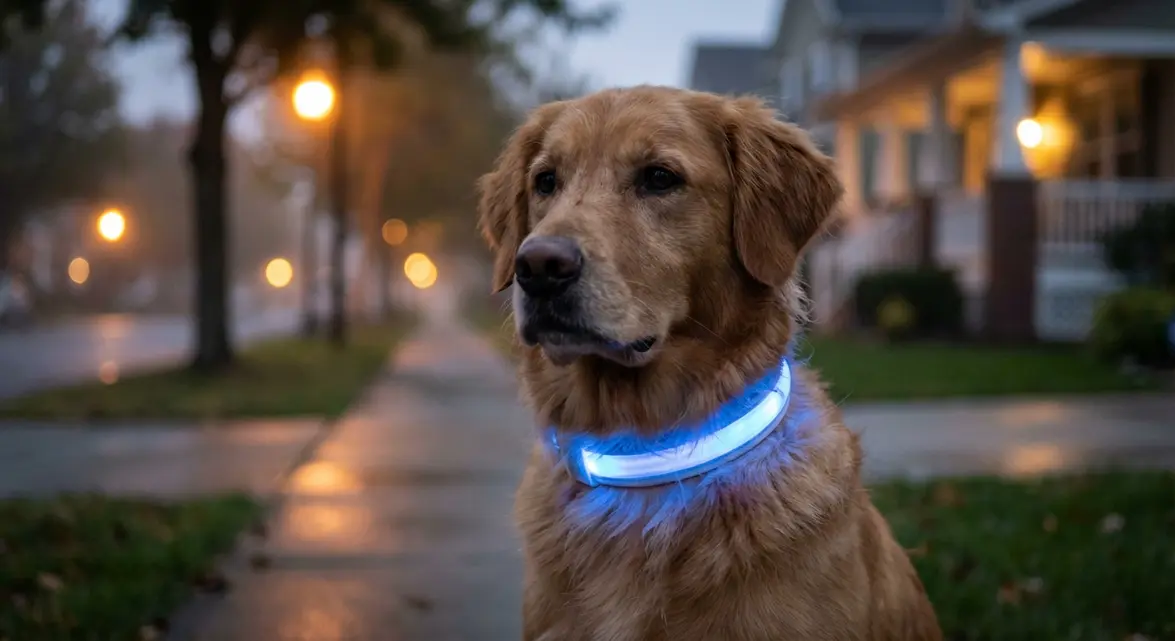
Night walks are when a lot of “good dogs” end up in close calls. A car turning into a driveway. A cyclist cutting a corner. A neighbor’s off-leash dog appearing out of the dark. If you’re stocking a shop or buying for a kennel program, the goal is the same: make the dog easy to spot, fast. A youly light up dog collar is one of the simplest tools for that job because it adds visible light right where people naturally look—around the dog’s neck and head.
This guide breaks down what to verify before you buy: LED brightness, battery style, comfort, durability, and the safety details that actually matter in the real world. We’ll also cover what to tell your customers so they use a youly light up dog collar correctly—because the best gear only works when it’s fitted and charged.
What to Verify First in a Youly Light Up Dog Collar
Most collars look similar in a photo. The difference shows up on the sidewalk at 9:30 p.m., in drizzle, with a dog pulling. Here’s what we recommend you check (or ask your supplier to confirm) before you commit shelf space or place a bulk order for a youly light up dog collar.
1) Visibility: brightness, color, and beam pattern
The best youly light up dog collar is the one that can be seen quickly from multiple angles—not just straight on. Look for:
- Even light distribution around the collar. Dark gaps reduce the “recognition” effect drivers rely on.
- Color options that stand out on most coats. Green and blue often read bright to the human eye, while red can be strong but sometimes blends with brake lights in traffic-heavy areas.
- Multiple modes (steady + flash). Steady is easier for distance tracking; flash can catch attention faster in busy streets.
For shop owners: it’s worth displaying the youly light up dog collar in a dim corner of the store (safely) so customers can see the difference between a clean, uniform glow and a weak “dot” of light.
2) Battery type: rechargeable vs. replaceable
This is where returns and complaints usually start. A youly light up dog collar generally comes in one of two battery setups:
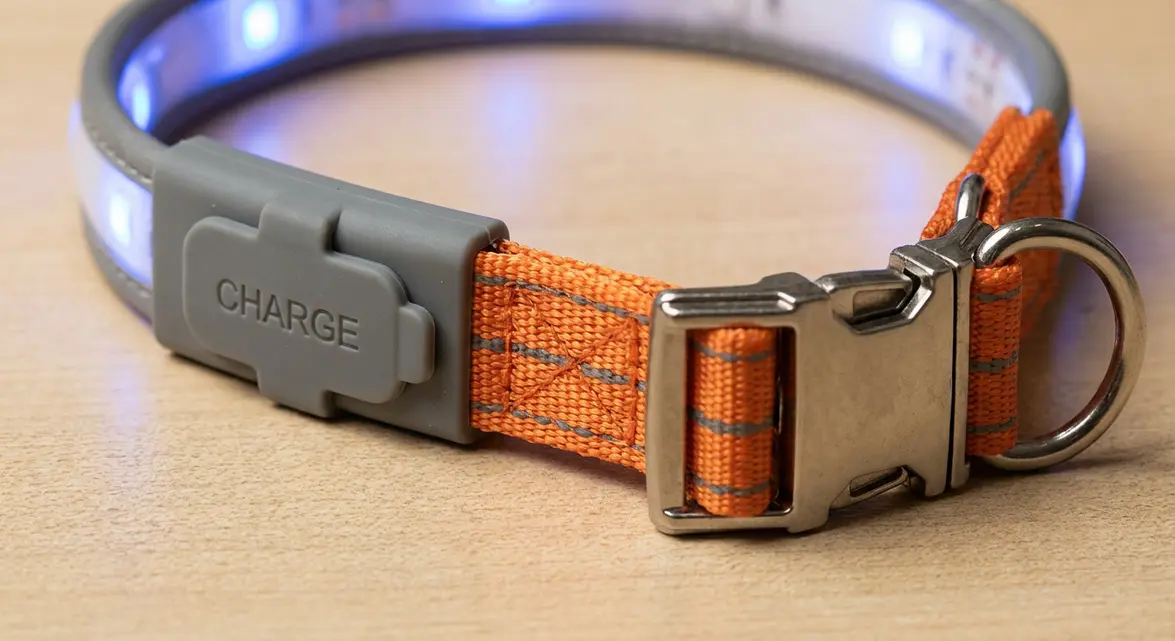
- Rechargeable (USB): Convenient and cheaper over time, especially for daily walkers. Confirm charging port type, charge time, and if the port cover seals well.
- Replaceable cells: Good for customers who hate charging cables or need long-term reliability in cold weather. Verify battery size availability and whether the battery door is tool-free or requires a small screwdriver.
Why it matters: cold temperatures can reduce runtime. If you sell to northern climates, you’ll want a youly light up dog collar with predictable performance and an easy recharge routine customers will actually follow.
3) Runtime: real use, not just the label
Packages often list best-case numbers. Real runtime depends on mode and LED output. For a youly light up dog collar, we advise customers to plan for:
- Steady mode: typically longer than high-frequency flashing on many designs, but it depends on electronics.
- Flash mode: sometimes saves power, sometimes not—ask for a realistic range.
- “Top-off” charging: a quick charge before an evening walk keeps output strong and reduces dimming mid-walk.
From a retailer standpoint, the best move is to include a small “charging habit” tip card near the youly light up dog collar display. It cuts down on avoidable complaints.
4) Water resistance: rain happens
Customers expect to walk in mist, snow, or after the sprinklers ran. A youly light up dog collar should handle splashes and wet fur without flickering. If the product claims an IP rating, here’s the plain-English version:
- IPX4: splash resistant—fine for light rain.
- IPX6: strong water jets—better for heavy rain or messy dogs.
- IP67: dust tight and brief submersion—meaning a puddle dip won’t end the collar. It also suggests tighter seals, which helps long-term reliability.
Even without an IP rating, check the charging port cover. A loose cover is the fastest way to turn a youly light up dog collar into a “works sometimes” collar.
5) Fit and adjustability: comfort is safety
If the collar is too loose, the light rotates under the dog’s throat and becomes harder to see. Too tight, and you risk rubbing and stress. The standard fit rule applies: two fingers under the collar. For a youly light up dog collar, also confirm:
- Size range that matches your customer base (toy breeds through large dogs).
- Trim-to-fit options if offered—great for inventory flexibility, but only if trimming doesn’t expose wiring.
- Weight and stiffness. A stiff collar can bother short-haired dogs or small dogs with delicate necks.
6) Hardware and materials: where failures happen
LEDs rarely “break” first. The failure point is usually the buckle, stitching, or ring. A dependable youly light up dog collar should have:
- Strong D-ring attachment points, ideally reinforced. This matters when a 70 lb Lab lunges; a weak ring can bend or tear out.
- Durable webbing (nylon or similar). Nylon is common because it resists abrasion and holds up to everyday pulling and friction.
- Secure buckle that doesn’t pop under tension, but still releases easily by hand.
Important detail: a youly light up dog collar is primarily for visibility. If a customer needs control, recommend pairing it with a sturdy leash and, for strong pullers, a front-clip harness.
Why a Youly Light Up Dog Collar Matters for Night Safety
Reflective trim is helpful, but it depends on headlights hitting it at the right angle. Lighted collars create their own visibility. That changes the safety equation for drivers, cyclists, and even other dog owners who need to read a dog’s position quickly.
Better “early recognition” from motorists
A steady glow from a youly light up dog collar helps a driver recognize “that’s a dog” sooner, not just “something moving.” Those extra seconds matter on residential streets and parking lots where people aren’t expecting a pet.
Easier leash handling and head tracking
When customers can see the dog’s head, they can correct direction earlier and avoid tangles—especially with multiple dogs. Many professional walkers use a youly light up dog collar as a simple management tool: they can see who’s sniffing, who’s turning, and who’s lagging.
Helps prevent dog-to-dog surprises
Darkness makes dogs (and people) startle more easily. A visible collar reduces surprise encounters because others see movement coming. For reactive dogs, a youly light up dog collar can be one more layer of “predictability” on a walk.
Practical Buying Tips: Stocking and Recommending the Right Youly Light Up Dog Collar
If you’re advising customers or choosing products for your own facility, here are the real-world pointers that keep satisfaction high.
Match the collar to the use case
- Neighborhood night walks: prioritize comfort, easy charging, and a bright steady mode. A youly light up dog collar that’s used daily needs simple routines.
- Camping and rural areas: favor longer runtime, tougher seals, and better visibility at distance. A reliable youly light up dog collar should stay bright after hours outdoors.
- Urban sidewalks: flash mode can help in visual clutter, but steady mode is still best for tracking a dog’s location near traffic.
Encourage a “two-safety-systems” mindset
We tell shops to position the youly light up dog collar as one piece of a night kit:
- Light + reflective: reflective leash or harness plus the lighted collar improves visibility from more angles.
- Light + ID: always keep tags and microchip info current. Visibility helps prevent incidents; ID helps recovery if something still goes wrong.
Set expectations on charging and storage
Customers who love their youly light up dog collar usually do two things: they charge it regularly and they store it correctly. Practical tips you can include at checkout:
- Charge after a wet walk once the collar is dry.
- Don’t leave it in a hot car; heat shortens battery life.
- Check the port cover after charging so it seals.
Offer sizing guidance that reduces returns
Returns drop when customers measure the dog’s neck and compare to the printed range. For a youly light up dog collar, remind them that thick-coated breeds may need a slightly larger size so the collar sits correctly without compressing fur.
Common Mistakes With a Youly Light Up Dog Collar (And How to Avoid Them)
- Relying on the collar as the only visibility tool: Pair the youly light up dog collar with reflective accessories for full coverage.
- Using the collar too loose: The light rotates and visibility drops. Two-finger fit helps keep the youly light up dog collar oriented.
- Forgetting to charge: A dim collar is basically a reflective collar with extra steps. Build a charging habit for the youly light up dog collar—plug it in with your phone at dinner.
- Assuming waterproof means “swim-proof”: Even a solid youly light up dog collar can fail if the charging port cover isn’t sealed.
Conclusion: What “Good” Looks Like in a Youly Light Up Dog Collar
A solid lighted collar is bright, comfortable, and dependable in ugly weather. It charges easily (or takes common batteries), fits without rotating, and doesn’t feel like a stiff plastic ring around the dog’s neck. If you’re running a shop, those details translate directly into fewer returns and better reviews. If you’re buying for your own dog, they translate into calmer, safer night walks—and that’s the point of a youly light up dog collar.
Frequently Asked Questions
How long does a youly light up dog collar usually last on a charge?
Runtime depends on brightness and mode. For a youly light up dog collar, customers should expect shorter runtime on the brightest steady settings and longer runtime on optimized flash settings. Encourage them to top off the charge before night walks.
Is a youly light up dog collar safe to use in the rain?
Most are designed for wet walks, but performance varies by sealing and port cover quality. A youly light up dog collar with a well-fitted charging cover and stronger water resistance is less likely to flicker or fail after repeated rainy outings.
Can I attach a leash to a youly light up dog collar?
Many models include a D-ring, but a youly light up dog collar is primarily a visibility device. For strong pullers or training walks, it’s often smarter to clip the leash to a sturdy collar or harness and use the lighted collar as an add-on.
How tight should a youly light up dog collar fit?
Use the two-finger rule: snug enough that the collar won’t spin under the neck, loose enough to avoid rubbing. Proper fit keeps the light facing outward, which is the whole advantage of a youly light up dog collar.
🚀 Ready to Upgrade Your Pet Safety Gear?
Thank you for reading our guide.
- 🔹 Looking for bulk pricing? Contact our Wholesale Team
- 🔹 Want to see more? Return to Homepage